
“I’m so hungry, but I don’t feel like driving anywhere!” ” I need to go grocery shopping, but I need to save my gas for work.” There are many reasons why anyone in today’s busy, chaotic life would need an app that can do the work for them. Instacart, Uber Eats, DoorDash, and Walmart+. Not to mention, most companies have developed their own apps for direct payout and convenience. But one thing is true: they use DoorDash or Uber Eats for delivery. But we will focus on the food delivery portion, since that is how these companies generate the bulk of their revenue.
Food delivery apps have become so normal a part of everyday life that most people do not stop to think about everything that happens after they tap “Place Order.” On the surface, DoorDash and Uber Eats make the process look easy: you choose your food, pay in the app, and wait for it to arrive. But behind that simple experience is a system that connects customers, restaurants, and drivers in real time. The drivers are the middlemen between you and your order.
Have you ever wondered how the concept was created? How do the drivers get paid? You may have considered doing it as a part-time gig, but you don’t know what would qualify you for hire. It is very convenient, but also expensive, depending on what you order and when you order it. And it doesn’t matter whether you are ordering food, groceries, or retail; this invention has eliminated the need for a car or for ordering an Uber, Lyft, or cab to get the shopping done.
In this blog, we explore all aspects of this amazing service and how the drivers make their living. Not to mention how this was all created so that you can enjoy your free time on your own dime. So grab your phoneputers and make sure your interweb is stable. Make sure you have enough space to download those apps, that you have enough money in your bank accounts to cover the delivery fees, and let’s order, order, order. Because after all, I am too lazy to get off my couch….. Gotta save that gas🤷🏽♀️
The Creation of the Delivery Food Service as we know it
DoorDash was founded in 2013 after its founders noticed that many local restaurants were using it. DoorDash officially identifies Tony Xu, Stanley Tang, and Andy Fang as co-founders, all of whom have been with the company since May 2013. Uber Eats came later through Uber, the company founded by Garrett Camp and Travis Kalanick, after the idea for Uber began in late 2008. Uber’s food delivery service first started as UberFresh in Los Angeles in 2014, then expanded and officially launched as the standalone Uber Eats app in Toronto in 2015. That eventually caught wind, and shortly after, Uber Eats was official.
Uber Eats and DoorDash exploded during COVID because lockdowns, restaurant dining room closures, and stay-at-home orders pushed many people to rely on delivery rather than dining out. DoorDash told investors that the pandemic caused a significant increase in revenue, orders, and marketplace sales as more consumers wanted delivery and more restaurants used the platform for both delivery and takeout; in the third quarter of 2020 alone, DoorDash said its total orders jumped to 236 million, up 237% from a year earlier, while Marketplace GOV rose to $7.3 billion, up 246%. Uber saw the same shift on its Eats side: in Q2 2020, Uber reported Delivery Gross Bookings grew 113% year over year, and by Q3 and Q4 2020, Delivery Gross Bookings were up 135% and 128% year over year, even while its ride business was still down sharply. In simple terms, COVID changed delivery from something people used occasionally into something many people depended on every week. That sudden change is what made both companies grow so fast.
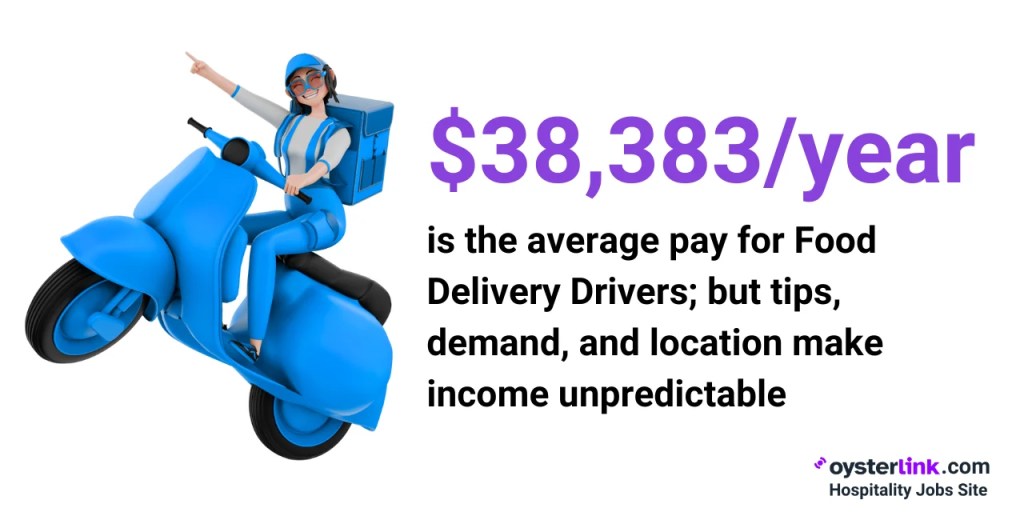
How they get hired
Getting the job itself is also pretty simple, but it still has requirements. DoorDash says Dashers must be at least 18 years old, have a smartphone, complete the signup, upload a valid government ID, take a selfie, and pass a background check. Uber Eats has similar requirements, but they vary a little depending on whether the person is delivering by car, scooter, bike, or on foot. For example, Uber says car and scooter couriers must generally be at least 19 years old. At the same time, bicycle or foot delivery can start at 18 in some places, and new couriers must provide identification, required documents, and complete a background check before going online.
Once a driver is approved, the app starts sending them offers. That is how they get the job of delivering food to you. It is not like a restaurant manager calling someone in for a shift. Instead, the app pushes delivery requests to drivers who are online. If the driver accepts, they go to the restaurant, pick up the food, and follow the app’s directions to the customer. Uber says that after a courier accepts a delivery request, the app shows the order number, order details, customer name, pickup directions, and drop-off instructions. DoorDash describes the process in the same basic way: drive to the restaurant, pick up the food, and bring it to the customer.
DoorDash: How the pay system works
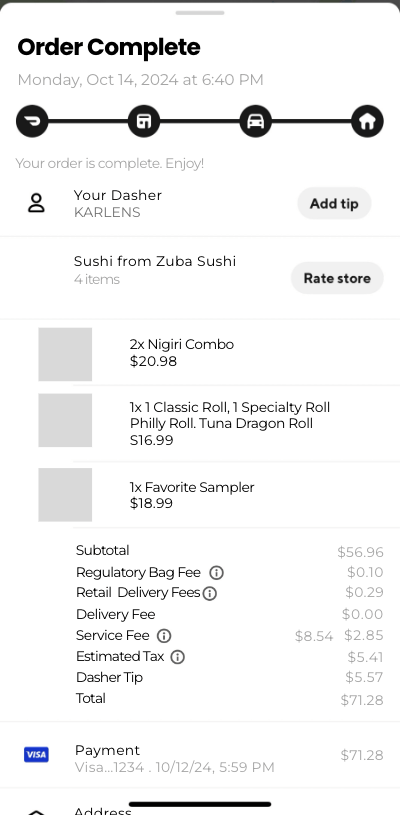
DoorDash says Dasher pay has three main parts: base pay, customer tips, and promotions. Dashers can choose between Earn per Offer, where pay changes based on the order’s time, distance, and desirability, and Earn by Time, where they earn a guaranteed active hourly rate while on a delivery. DoorDash also says Dashers receive 100% of customer tips and 100% of applicable promotion earnings. That tip policy matters because it clears up a common misconception. DoorDash’s official materials say tips are paid on top of base pay and promotions, not used as a substitute for them. In plain English, when a customer tips through DoorDash, that money goes to the Dasher, not to DoorDash.
Here is the part many people get wrong: on DoorDash, the customer’s delivery fee is not a direct cut to the driver. DoorDash’s consumer help page says the delivery fee “goes to DoorDash to help us cover costs,” while Dasher earnings are described separately as base pay, tips, and promotions. So, for DoorDash, it is more accurate to say the driver is paid through DoorDash’s pay formula rather than through a fixed, transparent share of the customer’s delivery fee.
Uber Eats: How the pay system works.
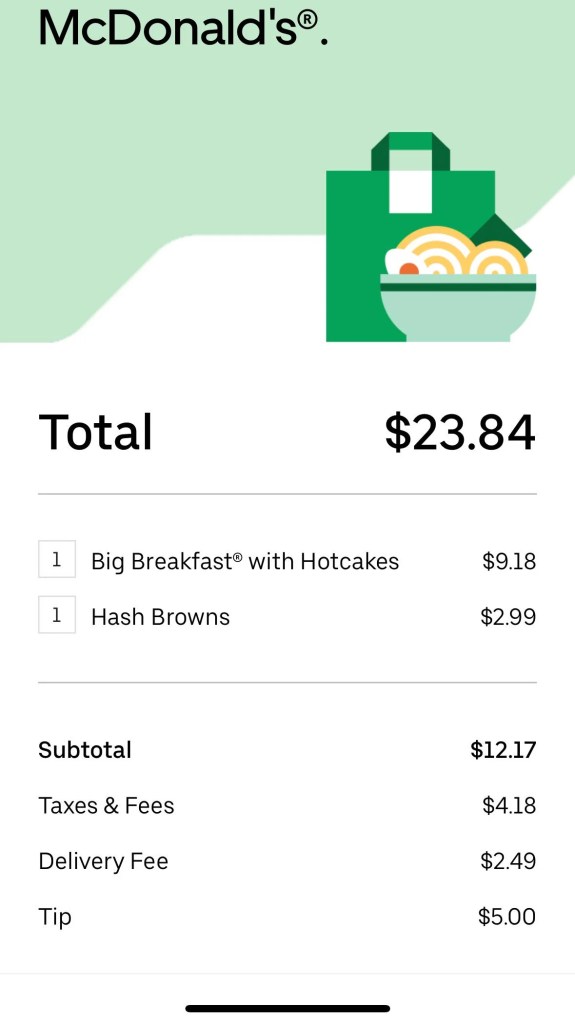
Uber Eats uses a similar marketplace structure, but its official pay language is a little different. Uber says delivery fares are calculated from factors such as estimated time and distance, multiple pickups or drop-offs, and periods with limited courier availability or unusually high demand. Uber also says tolls are added when applicable. Tips work clearly on Uber Eats as well: Uber says 100% of tips belong to the courier, and no service fee is applied to those tips. For delivery partners, Uber also says the app shows the total fare, including the estimated tip, before the courier accepts the delivery request. Customers then have 1 hour after delivery to modify the tip so that final earnings can change after drop-off.
Uber’s fee language is also more explicit than DoorDash’s. Uber Eats’ consumer help page says the Delivery Fee goes to couriers for the services they provide, or to merchants that handle their own delivery. It also says that for courier-delivered orders, the Service Fee helps cover order-related costs, that $0.10 goes directly to Uber for marketplace services, and that the rest goes to the courier for their services. Uber then notes that couriers pay a portion of the fees they collect back to Uber for services such as lead generation, payment processing, and support. On Uber Eats, it is fair to say that couriers receive at least part of the fee structure more directly than DoorDash publicly describes for Dashers.
Important: the dollar amounts below are made-up examples to show the flow of money. The rules about where the money goes are based on the companies’ official help pages. DoorDash says Dasher pay is base pay + 100% of tips + promotions, and DoorDash’s consumer help says the delivery fee goes to DoorDash. Uber says the delivery fee goes to the courier (or a self-delivering merchant), $0.10 of the service fee goes to Uber, and the rest goes to the courier; tips go 100% to the courier.
- DoorDash
Customer receipt
- Food subtotal: $24.00
- Tax: $2.16
- Delivery fee: $3.99
- Service fee: $3.00
- Tip: $5.00
Customer total: $38.15
What happens to that money
- Food subtotal ($24.00): This is the order itself, not driver pay.
- Tax ($2.16): not driver pay.
- Delivery fee ($3.99): goes to DoorDash, not directly to the driver.
- Service fee ($3.00): goes to DoorDash to help operate the platform.
- Tip ($5.00): goes 100% to the Dasher.
Example of what the Dasher could be paid
DoorDash does not publicly say, “the driver gets the delivery fee.” Instead, DoorDash says Dasher pay is made up of base pay, 100% of tips, and promotions. Base pay in Earn per Offer depends on factors like estimated time, distance, and desirability.
So a fake Dasher payout for that order could look like this:
- Base pay: $3.50
- Customer tip: $5.00
- Peak Pay/promo: $2.00 (Only if offered at time of order)
Dasher total: $10.50 / $8.50 if there is no promo or peak pay
So in this example, the customer paid $38.15. Still, the driver only got $10.50 or $8.50 — because on DoorDash, drivers are paid through DoorDash’s pay formula, not by simply receiving the delivery fee line on the customer receipt.
2) Uber Eats order
Customer receipt
- Food subtotal: $24.00
- Tax: $2.16
- Delivery fee: $3.99
- Service fee: $2.50
- Priority delivery fee: $1.99
- Tip: $5.00
Customer total: $39.64
What happens to that money
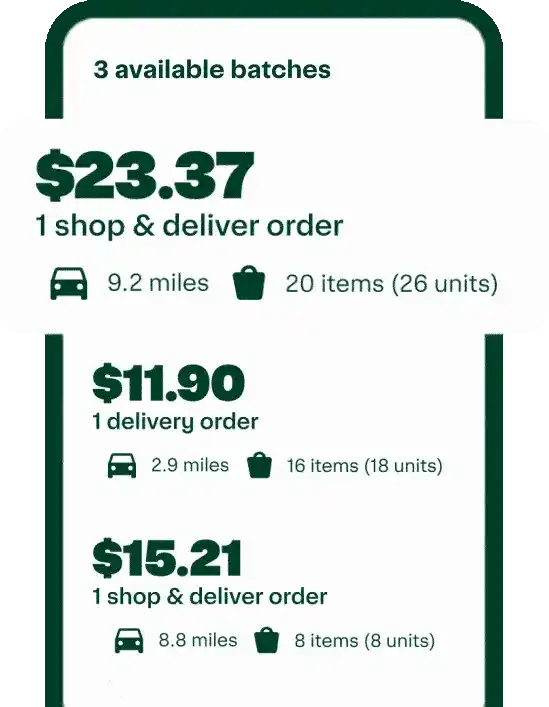
Uber’s help page says the breakdown works differently from DoorDash’s:
- Food subtotal ($24.00): This is the order itself, not driver pay.
- Tax ($2.16): not driver pay.
- Delivery fee ($3.99): goes to the courier for the service they provide, or to a merchant that handles its own delivery.
- Service fee ($2.50):$0.10 goes to Uber for marketplace services, and the rest goes to the courier. In this fake example, that would mean:
- Uber: $0.10
- Courier: $2.40
- Priority delivery fee ($1.99): goes to the courier.
- Tip ($5.00): goes 100% to the courier.
Total to driver: $13.38
So: $3.99 + $2.40 + $1.99 + $5.00 = $13.38
How the apps keep drivers online during busy times
Both platforms use incentives to make sure enough drivers are available when demand spikes. On DoorDash, Peak Pay adds extra money to eligible deliveries during certain times. DoorDash says this applies in Earn per Offer mode and, when applicable, is added to the hourly rate in Earn by Time mode. DoorDash also offers Challenges, which pay extra for completing a set number of deliveries within a defined period. Uber Eats does something similar with Boost+ and Quest.
Uber says Boost+ adds extra earnings on top of locations. Quest promotions pay extra when a courier completes a target number of trips within a set time frame. Uber also says Quest offers may not appear every week and depend on demand and app activity in a courier’s region. In practice, these bonuses serve two purposes. First, they pull drivers onto the road during obvious rush periods, such as lunchtime, dinner, weekends, and bad weather. Second, they help the apps shape supply outside the biggest peaks by offering goal-based bonuses over several days rather than only surge-style add-ons during the busiest hour.
That is not just generosity; it is labor supply management built into the platform model. What this really shows is that DoorDash and Uber Eats are not just food apps. They are dispatch systems. They use technology to match customers with restaurants and available drivers, and they use pay formulas, tips, and bonuses to make sure enough drivers stay online. The apps may look easy from the customer side, but for drivers, every order is a decision based on distance, time, expected pay, and whether the trip is worth taking.
Final Thougths
DoorDash and Uber Eats both run on the same basic system: customers place orders, restaurants or stores prepare the food, and independent drivers choose whether to accept the delivery through the app. From the outside, the two apps may look almost the same, but the way drivers get paid is not identical. DoorDash explains driver earnings as a mix of base pay, tips, and promotions, but it does not clearly state that the customer’s delivery fee is paid directly to the driver as a set amount.
Uber Eats explains its pay structure a little differently. Uber says drivers keep 100% of their tips, and its help pages say that the delivery fee and much of the service fee on courier-delivered orders go to the courier. However, couriers may still pay part of those fees back to Uber for using the platform. So even though both apps rely heavily on tips, the rest of the driver’s pay depends on the company’s formula, promotions, fees, and how each order is calculated.
The main point is that drivers do receive tips on both platforms, but delivery fees are handled differently. On DoorDash, the delivery fee helps cover DoorDash’s costs, while drivers are paid through base pay, tips, and possible promotions. On Uber Eats, the delivery fee is described as going to couriers or self-delivering merchants, and part of the service fee may also go to the courier. This difference matters because it shows that even though DoorDash and Uber Eats seem similar to customers, the way drivers actually earn money can be very different.

