

Ah, yes! A brand new Blog Series is here! The History of Sports 101 Series. I know, right? What took me so long? Well, you just never mind that. Just know this series is for all sports fans. Whether you enjoy one particular sport or several or all of them, you enjoy their history, or whatever your reasoning is, you will appreciate this series. From golf to tennis to baseball and beyond. I’m sure I’ll cover your favorite one, and I hope I make you proud. No matter the sport, there is something for everyone in this series that they will love to learn and enjoy.
OOlllllleee OOOllleee Ole OOOOOllllleee!!!!!!!! WAVE! So you love soccer with all your heart and may even call yourself a soccer aficionado. You more than likely have followed the careers of your favorite players, their stats, and the franchise history, but do you know the history of the sport itself? Have you ever stopped to think about the very first soccer superstars? Way before, we had TV, cable, and highlights. Can you go on a game show and really make other fans of the same team proud?
Soccer, known as football outside North America, has a rich and diverse history. It has grown from modest beginnings to become the world’s most popular sport, captivating millions of fans worldwide. The revenue that it generates is outstanding. With a worldwide fan base and die-hard, and I mean die-hard fans, the secret to this sports magic clearly lies in the energy of the fans, which in return fuels the players on the field, and that creates Soccer MAGIC🪄⚽!
In this first sport of the blog series, we’ll explore the origins of soccer, how the sport works, and highlight some of the greatest players in both men’s and women’s leagues. We’ll also delve into the very first championship game and explain the differences between MLS, UEFA, FIFA, LaLiga, and Copa America leagues and tournaments. You will learn the roles of each position and maybe even become a superfan after this short history lesson. So gear up and get your boots. Grab the soccer ball and make sure your shin guards are good. No Slide Tackling! You got 2 yellow cards last time! We can not afford to lose a man at this point…..
The Origins of Pitz and Modern Soccer

Pitz, an ancient Mesoamerican ballgame, is often considered a precursor to modern soccer. Played by the Mayans, the game held significant cultural and religious importance, often associated with rituals and ceremonies. The objective was to pass a solid rubber ball through a stone hoop placed high on the court’s walls without using hands, a feat requiring remarkable skill and athleticism. The game was physically demanding and could be quite dangerous, sometimes resulting in severe injuries or even death. Pitz was not just a sport but a vital aspect of Mayan society, symbolizing cosmic struggles and reflecting the social and political dynamics of the time.
The transformation of Pitz into modern soccer can be traced back to the influence of various cultures and the eventual codification of the game by the English. As Europeans encountered different forms of ball games during their explorations, they incorporated elements from these diverse traditions. The English, in particular, played a crucial role in formalizing the rules and structure of soccer in the 19th century. They established standardized regulations, organized clubs, and set up competitive leagues, paving the way for the global sport we know today. While modern soccer is vastly different from Pitz in its rules and gameplay, the essence of the game—a test of skill, teamwork, and strategy—remains a common thread connecting these two historical periods.
How Soccer Works
Soccer is a simple yet dynamic sport played by two teams of eleven players each. The objective is to score goals by getting the ball into the opposing team’s net, using any part of the body except the hands and arms. Matches are typically 90 minutes long, divided into two halves of 45 minutes each. If the score is tied, extra time or penalty shootouts may be used to determine the winner, especially in knockout tournaments.
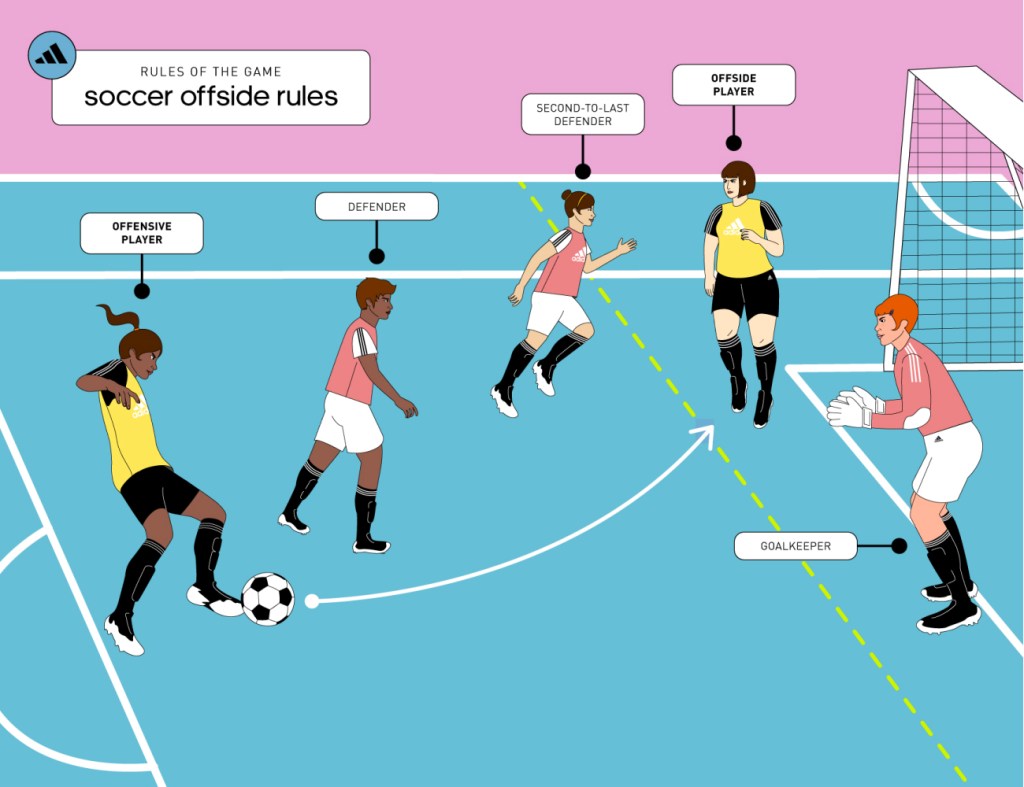
The Roles of the Players:
Goalkeeper (GK)
- Role: The goalkeeper’s primary job is to prevent the opposing team from scoring by blocking shots at goal. They are the only player allowed to use their hands and arms, but only within the penalty area.
- Skills Needed: Quick reflexes, good hand-eye coordination, strong shot-stopping ability, good communication with the defense, and adeptness at handling high balls.
Defenders
Defenders are responsible for stopping the opposition’s attacks and clearing the ball from the defensive zone.
- Center Backs (CB)Role: Positioned in the center of defense, their main task is to block attackers, intercept passes, win headers, and clear the ball from the penalty area.
- Skills Needed: Physical strength, good positioning, tackling, and aerial ability.
- Full Backs (Left Back (LB) and Right Back (RB))Role: Positioned on either side of the central defenders, they defend against wingers and also support the attack by providing width and delivering crosses into the opposition’s penalty area.
- Skills Needed: Speed, stamina, tackling, crossing ability, and positional awareness.
- Wing Backs (LWB and RWB)Role: A more attacking variant of full-backs, wing-backs are expected to cover the entire flank, contributing to both defense and offense.
- Skills Needed: High stamina, speed, crossing ability, dribbling, and defensive skills.
Midfielders
Midfielders link the defense and the attack, playing a crucial role in controlling the game.
- Defensive Midfielder (CDM)Role: Positioned in front of the defense, their primary task is to protect the backline by breaking up opposition attacks and intercepting passes.
- Skills Needed: Tackling, positional sense, passing, and stamina.
- Central Midfielder (CM)Role: Positioned in the center of the pitch, they balance defensive and attacking duties, distribute the ball, and support both defense and attack.
- Skills Needed: Passing, vision, stamina, tackling, and technical ability.
- Attacking Midfielder (CAM)Role: Positioned behind the forwards, they focus on creating goal-scoring opportunities by providing key passes and assists.
- Skills Needed: Creativity, dribbling, passing, vision, and shooting.
- Wide Midfielders/Wingers (LM and RM)Role: Positioned on the flanks, their main task is to deliver crosses into the box, beat defenders with pace and skill, and track back to help defensively.
- Skills Needed: Speed, dribbling, crossing, and stamina.
Forwards
Forwards are primarily responsible for scoring goals and creating offensive opportunities.
- Striker (ST)Role: Positioned nearest to the opponent’s goal, their main task is to score goals by converting chances into the net.
- Skills Needed: Finishing, positioning, pace, strength, and heading.
- Second Striker/Center Forward (CF)Role: Positioned slightly behind the central striker, they support the striker by creating chances and scoring goals themselves.
- Skills Needed: Dribbling, passing, shooting, and positioning.
- Wingers (LW and RW)Role: Positioned wide in the forward line, similar to wide midfielders but with more emphasis on attacking. They aim to beat defenders, deliver crosses, and cut inside to shoot.
- Skills Needed: Speed, dribbling, crossing, and finishing.
The Goal of the TEAM
The primary goal of a soccer team is to score more goals than the opponent within the allotted time (90 minutes, plus stoppage time). This is achieved through a combination of defending well to prevent goals and attacking effectively to create and convert scoring opportunities. Teams often employ various strategies and formations to optimize their strengths and exploit their opponent’s weaknesses. Effective communication, teamwork, and strategic planning are crucial for success.

Understanding Soccer Leagues and Tournaments
MLS (Major League Soccer): MLS is the top professional soccer league in the United States and Canada. Established in 1993, it features teams from both countries and operates on a franchise system similar to other American sports leagues. The season culminates in the MLS Cup, the league’s championship game.
UEFA (Union of European Football Associations): UEFA is the governing body for soccer in Europe and organizes several prestigious tournaments, including the UEFA Champions League, which features the best club teams from across Europe, and the UEFA European Championship (Euros), a major international competition held every four years.
FIFA (Fédération Internationale de Football Association): FIFA is the global governing body for soccer. It organizes the FIFA World Cup, the most prestigious tournament in the sport, held every four years. FIFA also oversees the FIFA Women’s World Cup and various youth and club competitions worldwide.
Copa America: Copa America is the oldest international continental soccer competition, organized by CONMEBOL, the South American Football Confederation. It features national teams from South America and occasionally invited teams from other continents. The tournament has a rich history, with its first edition held in 1916.
LaLiga: LaLiga, officially known as LaLiga Santander for sponsorship reasons, is the top professional football division of the Spanish football league system. Established in 1929, it features 20 teams competing in a round-robin format, with each team playing 38 matches per season. Renowned for its high-quality play and competitive nature, LaLiga is home to some of the most successful and storied clubs in football history, including Real Madrid and FC Barcelona.

Legendary Players in Soccer History
Men’s Soccer:
- Pelé (Brazil) – Widely regarded as one of the greatest players of all time, Pelé won three World Cups (1958, 1962, 1970) and scored over 1,000 career goals.
- Diego Maradona (Argentina) – Known for his extraordinary dribbling skills, Maradona led Argentina to victory in the 1986 World Cup, famously scoring the “Hand of God” goal.
- Lionel Messi (Argentina) – A modern-day legend, Messi has won multiple Ballon d’Or awards and is known for his incredible scoring ability and playmaking.
- Cristiano Ronaldo (Portugal) – Another contemporary icon, Ronaldo is celebrated for his athleticism, goal-scoring prowess, and numerous titles with clubs like Manchester United, Real Madrid, and Juventus.
Women’s Soccer:
- Mia Hamm (USA) – A pioneer of women’s soccer, Hamm won two World Cups (1991, 1999) and two Olympic gold medals (1996, 2004).
- Marta (Brazil) – Often referred to as the greatest female player of all time, Marta has won multiple FIFA World Player of the Year awards and holds the record for most World Cup goals.
- Abby Wambach (USA) – Known for her heading ability and scoring record, Wambach was a crucial player in the USA’s 2015 World Cup victory and has two Olympic gold medals.
- Homare Sawa (Japan) – Sawa led Japan to their first Women’s World Cup victory in 2011 and won the FIFA Women’s World Player of the Year award the same year.
The First Championship Game
The first official international soccer match took place on November 30, 1872, between England and Scotland. However, the first major international championship was the inaugural FIFA World Cup held in 1930 in Uruguay. Thirteen teams participated, and the host nation, Uruguay, emerged victorious by defeating Argentina 4-2 in the final, securing their place in history as the first World Cup champions.
The Most Decorated Team
The Brazilian national team is the most decorated in soccer history, having won the FIFA World Cup five times (1958, 1962, 1970, 1994, and 2002). Known for their flair, skill, and attacking style, Brazil has produced numerous soccer legends and remains a powerhouse in international soccer. However, Argentina is undoubtedly on its way with the help of Argentina’s starting line-up, featuring five Premier League players: Aston Villa goalkeeper Emiliano Martinez, Chelsea’s Enzo Fernandez, Liverpool midfielder Alexis Mac Allister, Manchester United center-back Lisandro Martinez, and Tottenham Hotspur’s Cristian Romero.

The Top-Paid Soccer Player
In the world of soccer, top-paid male players command astronomical salaries, driven by their skill, marketability, and global fan base. As of 2023, players like Cristiano Ronaldo, Lionel Messi, and Neymar Jr. dominate the list of highest earners. Cristiano Ronaldo, now playing for Al Nassr in Saudi Arabia, reportedly earns over $200 million annually, including his club salary and endorsement deals. Lionel Messi, after his move to Inter Miami in Major League Soccer (MLS), continues to rake in significant earnings through a combination of his club contract and lucrative sponsorships. Neymar Jr., representing Paris Saint-Germain (PSG), also remains among the highest-paid, with his salary complemented by various commercial partnerships.
On the women’s side, the gap in earnings is still notable but has been gradually narrowing thanks to increased visibility and investment in women’s soccer. Alex Morgan, one of the most recognizable faces in women’s soccer, earns a substantial income through her club contract with San Diego Wave FC and endorsements with brands like Nike and Coca-Cola. Megan Rapinoe, another prominent figure, also commands a significant salary playing for OL Reign in the National Women’s Soccer League (NWSL) and through endorsements. Additionally, European stars like Ada Hegerberg, who plays for Olympique Lyonnais, have seen their earnings rise as the popularity and investment in women’s soccer continue to grow. Despite the progress, the disparity in pay between male and female players remains a critical issue within the sport.
The Evolution of Soccer
Soccer continues to evolve with advancements in technology, training methods, and tactics. Video Assistant Referee (VAR) technology has been introduced to assist referees in making crucial decisions. Additionally, sports science and analytics are playing an increasingly significant role in player performance and team strategy.
The Future of Soccer
The next generation of soccer players is poised to take the sport to new heights. Emerging talents in both men’s and women’s soccer are making their mark. In the men’s game, players like Erling Haaland and Kylian Mbappé are already stars at a young age. On the women’s side, players like Catarina Macario and Trinity Rodman are showcasing their talents and promise to change the way the game is played for women in the future.
In high school and college soccer, several young players are gaining attention. For the men’s game, names like Efraín Álvarez (LA Galaxy Academy) and Ricardo Pepi (FC Dallas) are ones to watch. In women’s soccer, players like Mia Fishel (UCLA) and Alyssa Thompson (Harvard-Westlake School) are showing exceptional potential.
Final Thoughts
Soccer’s journey from ancient civilizations to the global phenomenon it is today is a testament to its universal appeal. The sport’s simplicity, excitement, and ability to bring people together have made it a beloved pastime for millions. Whether watching legendary players like Pelé and Mia Hamm or cheering for your favorite team in MLS, UEFA, FIFA, or Copa America tournaments, soccer continues to inspire and unite fans around the world.
Soccer’s rich history, legendary players, and exciting future make it a captivating sport beloved by millions. From its humble beginnings to its status as a global phenomenon, soccer continues to inspire and unite people around the world. As the game evolves and new stars emerge, the future of soccer looks brighter than ever.

*********************** Must Watch Docuseries***************

“Wrexham A.F.C.,” also known as “Welcome to Wrexham,” is a documentary series that chronicles the journey of Wrexham Association Football Club under the new ownership of Hollywood actors Ryan Reynolds and Rob McElhenney. The series begins with the surprising announcement in November 2020 that the two actors had acquired the historic Welsh club, founded in 1864, with a vision to revitalize it and achieve promotion to higher leagues. Season 1 focuses on the Men’s team, while Season 2 focuses on the Women’s team.
The docuseries provides an in-depth look at the challenges and triumphs faced by the club, both on and off the pitch. It explores the passionate fan base, the cultural significance of the club to the local community, and the strategic decisions made by Reynolds and McElhenney as they navigate the complexities of football management. “Wrexham A.F.C.” is a compelling narrative about ambition, community, and sports’ unpredictable nature. It offers viewers an intimate look at the efforts to restore a beloved football club to its former glory.



Football has always been my favorite sport. I never like soccer or futbol as a kid. However now that I’m older I understand the allure of the game. Loving it. Go Miami
LikeLiked by 1 person