

Have you ever paused when hearing a familiar last name and wondered if you might share more than just a name with that person? It’s a curious moment—hearing your surname out in the world and questioning whether there’s a hidden family connection or a shared ancestral story. Sometimes, even hearing a unique name can spark curiosity about someone’s heritage, prompting questions about where their roots may lie—perhaps in Germany, Russia, Ukraine, or elsewhere. That curiosity is what makes surnames so fascinating: they’re a bridge to history.
Surnames have become a universal part of how we identify ourselves, yet many of us rarely stop to think about what they actually mean or where they come from. These names are more than just identifiers; they are markers of lineage, geography, and social identity. Whether derived from a profession, a place, a clan, or a descriptive trait, last names often carry stories that have been passed down for generations.
Despite how commonplace they seem today, surnames are a relatively modern development in human history. For much of the ancient world, a single name was sufficient. As populations grew and societies became more structured, the need for more precise identification arose—especially for legal, administrative, and taxation purposes. The adoption of surnames reflects this societal shift toward more excellent organization and record-keeping.
This blog delves into the origins of surnames, how they were formalized, and the diverse ways different cultures assigned them. From the occupational “Smiths” of England to the patronymic “Ivanovs” of Russia, surnames offer a window into the past. Understanding them helps us better appreciate not just our own identities but the historical forces that shaped how we name—and know—each other.

The Need for Surnames
For much of early human history, individuals were known by a single name. In small communities where everyone knew each other, this was sufficient. A name like “John” or “Maria” was all that was needed to identify someone. However, as populations expanded and societies grew more structured—especially with the rise of urban centers and bureaucratic governance—the need for more specific identifiers became apparent.
By the time societies began maintaining records for taxation, military service, and land ownership, simply knowing someone’s first name was no longer enough. The solution? An additional name—what we now call a surname.
Ancient Roots: Early Use of Surnames
While surnames developed independently across the globe, one of the earliest and most enduring examples comes from China. Records indicate that hereditary family names (known as xing) were in use as early as 2852 BCE during the legendary reign of Emperor Fu Xi. The noble classes initially used these names and later adopted them by the general population, especially during the Qin Dynasty (221–206 BCE), when state control required clear identification of citizens.
In Ancient Rome, a complex naming system evolved, including a nomen (clan name) and a cognomen (a family or branch name), which were used mainly by the aristocracy. However, the use of hereditary surnames declined after the fall of the Roman Empire, only to reemerge in the medieval period.
The Rise of Surnames in Medieval Europe
In Europe, surnames began to take hold between the 11th and 16th centuries, often starting with the upper classes and slowly spreading to the general population. In England, the Norman Conquest of 1066 played a significant role in introducing the concept of hereditary surnames. By the 14th century, surnames had become common. In 1538, King Henry VIII ordered that parish priests maintain records of baptisms, marriages, and burials—further cementing the importance of surnames for administrative purposes.
The adoption of surnames was also influenced by local culture and language. In France, Germany, and Italy, similar patterns occurred, with surnames being recorded to facilitate taxation and legal identification.
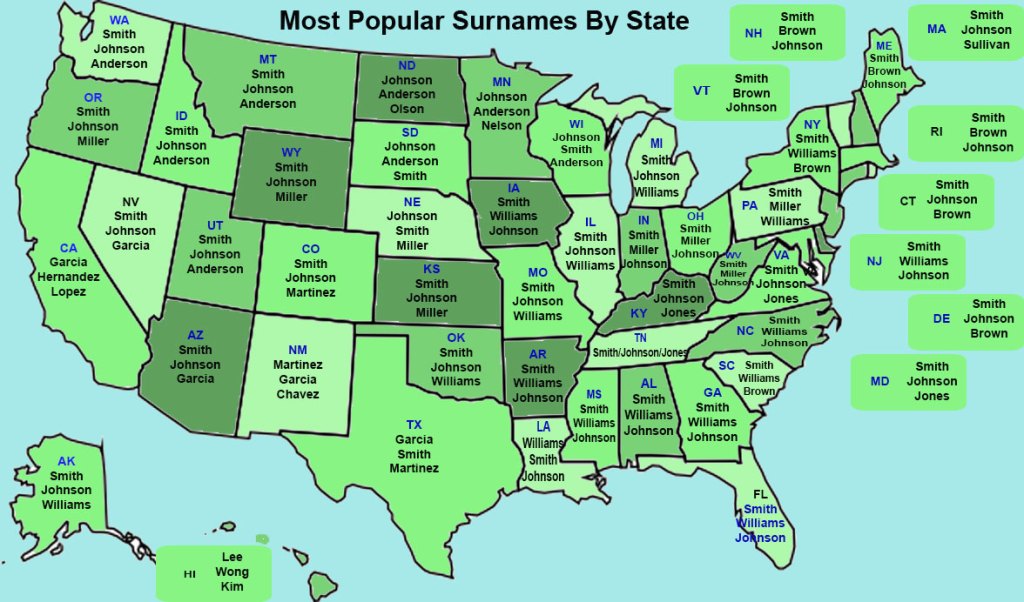
Surnames Around the World
- India: Surnames often reflect caste, profession, region, or religious affiliation. For example, “Sharma” is commonly associated with the Brahmin caste, while regional surnames like “Banerjee” (Bengal) or “Naidu” (South India) reflect linguistic and cultural heritage.
- Arab Cultures: Many Arabic surnames are patronymic (based on the father’s name) or tribal. The prefix “Al-” often denotes a family or place of origin (e.g., Al-Fulan).
- Africa: Naming systems vary widely. In many cultures, surnames can reflect the day of the week someone was born, the family lineage, or clan affiliation. Colonial influence introduced European surname conventions in some regions.
- Japan: Prior to the Meiji Restoration (1868), only the samurai and noble classes had surnames. After modernization reforms, every citizen was required to adopt a family name, leading to a wide array of surnames based on nature, location, or social roles.
Types of Surnames and Their Meanings
Surnames often developed from five major categories:
- Occupational: Derived from a person’s trade or profession.
- Examples: Smith (metalworker), Cooper (barrel maker), Baker
- Topographical or Locational: Indicating where someone lived or came from.
- Examples: Hill, Brooks, Atwood, Churchill
- Patronymic/Matronymic: Indicating descent from a parent or ancestor.
- Examples: Johnson (son of John), MacDonald (son of Donald), Fitzgerald (son of Gerald)
- Descriptive or Nicknames: Based on personal traits or characteristics.
- Examples: Small, Armstrong, Brown
- Clan or Tribal Names: This is especially common in non-Western cultures.
- These surnames identify the extended kinship or tribal group.

Standardization and Legacy
Over time, surnames became hereditary and passed down through generations. Governments and religious institutions began recording them in official documents—birth records, marriage certificates, tax rolls, and more. As a result, surnames became an essential tool for identity and societal organization.
The spread of colonialism, immigration, and globalization has since altered and hybridized surname traditions. Many families adopted or anglicized their names to fit into new cultures—sometimes voluntarily, sometimes under pressure.
Final Thoughts
Today, a surname may seem like a simple part of your identity, but behind each one lies a tapestry of historical forces—migration, social structure, law, and language. Whether your last name tells a story of a trade, a place, a family line, or a lost tradition, it is a living piece of history.
Exploring the origin and meaning of surnames not only helps us understand our own family stories but also offers a fascinating glimpse into how societies evolved and identified their members over time So the next time someone asks, “Where are you from?” you might start by saying, “Well, let me tell you about my name…” Because we all have a story about our surnames…..

 Realizations with Tiffany K. Charles