

It’s the sport that always ruined your Saturday afternoon or your entire Sunday as a kid. If you didn’t have cable, then you were at the mercy of it until the evening programming came on, or at least until you found something better to watch. Maybe you grew to love it, or maybe you still find it boring; it’s one of the oldest sports in the world. Some of the greatest athletes in this sport are known, without most even watching a single golf match. With the instant relay of news on social media platforms, many up-and-coming players are gaining new and younger fans every day.
Golf, a game synonymous with precision, patience, and prestige, has captivated players and spectators for centuries. While today’s game is a highly organized sport with well-defined rules and lush, manicured courses, its origins are much humbler and more uncertain. Golf is a sport renowned for its grace, precision, and strategic depth. Its long history is filled with iconic players, tournaments, and a continual evolution of the game. To many, it’s a relaxing and very soothing sport. To others, it is the longest, most dreadful thing to see and takes up most of their afternoons.
In this tenth and final blog installment of The History of Sports 101, we will explore the origins of golf, significant tournaments, the best players, the highest-paid athletes, and the future stars to watch in this ever-evolving sport. So, let’s take a stroll down the fairway of history to explore the evolution of golf, from its ancient roots to the global sport it has become today. Don’t worry about your clubs or your country club membership. Just put on some good sunscreen and bring your chair. I got us tickets to the PGA Tour.

The Creation of Golf: A Game of Ancient Roots
Golf, as we know it today, is believed to have been created in Scotland in the 15th Century. However, variations of ball-and-stick games date back to ancient Rome and China. The Scots are widely credited with developing the modern version of golf, with historical records indicating that in 1457, the Scottish Parliament banned the game because it was distracting soldiers from practicing archery.
The exact inventor of golf remains a mystery. Still, it is thought to have developed organically, as people started hitting pebbles with sticks along the dunes of Scotland’s eastern coast. The game gradually formalized, and by the 16th Century, it had earned the endorsement of Scottish royalty, including King James IV, who was an avid golfer.
The Birth of Modern Golf: Scotland in the 15th Century
Scotland’s connection to golf is undisputed. The game as we know it today was first recorded in the country in the early 15th Century. One of the first references to the game comes from a 1457 Act of the Scottish Parliament issued by King James II. The decree banned both golf and soccer, as they were seen as distractions from military training, specifically archery. The ban was largely ignored, and by the early 16th Century, golf had gained immense popularity, especially among the Scottish nobility.
By 1502, the ban on golf was lifted, and King James IV became one of the first royals known to have played the sport. The famed Old Course at St. Andrews, which opened in 1552, became the spiritual home of golf and remains one of the most iconic courses in the world today.

The Development of Rules and Equipment
Early forms of golf had few standardized rules, with variations in play depending on the course. However, as the game gained popularity, especially among Scottish nobility, the need for formal rules became apparent. The first known written rules of golf were produced in 1744 by the Honorable Company of Edinburgh Golfers for a competition at Leith Links. These 13 rules served as the foundation for modern golf regulations.
Golf equipment also evolved. Early balls were made from wood, but by the 17th Century, feathers—leather balls stuffed with feathers—became the standard. These were expensive and fragile, but they allowed for more consistent play. It wasn’t until the 19th Century that the gutty ball, made from gutta-percha (a type of rubber), revolutionized the game by making balls more durable and affordable. The advent of mass production and advancements in club design, notably the switch from wooden to steel shafts in the early 20th Century, also contributed to the sport’s modern evolution.
The First Golf Tournament: The Open Championship
While golf had deep roots in Scotland, it was only a short time before the sport began to spread internationally. By the 18th Century, the game had reached England, and by the 19th Century, it was played in countries like the United States, Canada, and India. Scottish immigrants played a significant role in the global dissemination of the game.
The world’s oldest golf tournament is The Open Championship, commonly referred to as The British Open, first held on October 17, 1860, at Prestwick Golf Club in Scotland. The members of Prestwick Golf Club created the tournament to determine the best golfer in the world, and only eight players competed in that inaugural event.
The Open has since become one of the four major championships in men’s golf, alongside the Masters, the U.S. Open, and the PGA Championship. It remains a prestigious event, with players from around the world vying for the coveted Claret Jug. In the United States, golf gained momentum in the late 1800s, particularly after the establishment of the United States Golf Association (USGA) in 1894. The creation of iconic tournaments like the U.S. Open (first played in 1895) and the Masters (established in 1934) helped cement golf’s place in American sports culture.

The Best Players in Golf History
Male Players:
- Jack Nicklaus Often referred to as “The Golden Bear,” Jack Nicklaus is widely regarded as the greatest golfer of all time. Nicklaus holds a record 18 major championships, and his consistency and longevity across multiple decades have earned him a legendary status in the sport.
- Tiger Woods is a modern icon. Tiger Woods revolutionized the game with his athleticism, mental toughness, and flair for dramatic victories. Woods has 15 major championships and is tied with Sam Snead for the most PGA Tour wins (82). His impact on the sport is immeasurable, inspiring a generation of young players.
Female Players:
- Annika Sörenstam is widely regarded as the greatest female golfer in history. The Swedish superstar won 10 major championships and over 90 international tournaments. She was known for her consistency, precision, and relentless drive for success that elevated women’s golf.
- Lorena Ochoa dominated women’s golf in the mid-2000s. She spent 158 consecutive weeks as the world’s number-one female golfer. Ochoa won two major championships and left an indelible mark on the game, even though she retired at a young age to focus on her family and charitable work.

The Highest-Paid Golfers
Male:
Phil Mickelson: Phil Mickelson, a left-handed golfing legend, is another high earner thanks to his longevity in the game, consistent tournament success, and lucrative sponsorships.
Tiger Woods: Tiger Woods is not only one of the greatest players in golf history but also the highest-paid golfer of all time. His endorsement deals, primarily with Nike and other major companies, have brought in significant income, and he became the first athlete to earn over a billion dollars.
Female:
Lydia Ko: New Zealand’s Lydia Ko, a former world number one, is one of the highest-paid female golfers thanks to her on-course success and various endorsement deals.
Nelly Korda: The American golfer Nelly Korda, with multiple wins and a major championship, is one of the leading earners in women’s golf today, thanks to her success in both the LPGA and endorsements.

Future Stars to Watch
Male:
Collin Morikawa has already won multiple major championships and is known for his poise under pressure and incredible ball-striking. He represents the next generation of elite golfers and is poised for continued success in the coming years.
Viktor Hovland hails from Norway and is one of the rising stars of the PGA Tour. With multiple wins under his belt, including a prestigious victory at the FedEx Cup, Hovland has a bright future in the game.
Female:
Rose Zhang is a young American golfer who has been making waves since her amateur days, and she is expected to be a dominant force in the women’s game. With her skills and mental toughness, she could follow in the footsteps of greats like Annika Sörenstam.
Atthaya Thitikul, the Thai golfer Atthaya Thitikul, is another rising star in women’s golf. She has already won tournaments on the LPGA Tour and continues to improve, making her a player to watch in the years ahead.
The Evolution of Golf: Tradition Meets Technology
The game of golf has evolved significantly since its creation. While the core principles remain the same—getting the ball into the hole in as few strokes as possible—the equipment, course design, and player fitness have all transformed.
Media and Sponsorships: The growth of televised golf and digital platforms has expanded the sport’s audience worldwide. Major brands continue to invest in golf, both through tournament sponsorships and player endorsements, making the sport more accessible and lucrative for its top players.
Equipment: Modern clubs, particularly drivers, have revolutionized the distance players can hit the ball. The introduction of titanium and carbon fiber in club heads, along with advanced golf ball technology, allows players to hit further and with more control. Golfers today are also equipped with a variety of gadgets, from rangefinders to GPS systems, helping them navigate courses more efficiently.
Fitness: In the past, golfers were only sometimes seen as athletes. Today, players like Tiger Woods and Brooks Koepka have shown that strength, flexibility, and fitness can dramatically improve performance. Many golfers now follow rigorous training regimens and maintain athletic physiques.
Globalization: While American and European players once dominated golf, it has become a truly global sport. The rise of players from Asia, particularly South Korea and Japan, as well as countries like South Africa and Australia, has broadened the competitive field and increased the game’s international appeal.

The Future of Golf
Looking forward, golf seems poised for continued global growth, especially with efforts to diversify the sport’s appeal. Initiatives aimed at introducing the game to younger audiences and underrepresented communities have the potential to broaden the player base and audience.
As new technology continues to enhance both the equipment and viewing experience, golf will likely continue to evolve. Drone coverage, virtual reality (VR) broadcasts, and advanced statistics are already improving the fan experience, making the sport more engaging to watch.
Furthermore, sustainability in golf course management is becoming an increasingly important focus, with many courses adopting eco-friendly practices to conserve water, protect wildlife, and reduce their environmental impact.
Final Thoughts
Iconic players, advances in equipment, and a growing focus on fitness have shaped golf’s journey from its Scottish roots to a global phenomenon. As new talent emerges and technology pushes the boundaries, the sport’s future looks promising. Today, both men’s and women’s golf are more competitive and engaging than ever, drawing in audiences around the world.
Golf’s enduring appeal stems from its unique blend of tradition and innovation. It challenges players at every level, offering a test of skill, patience, and precision. Whether on the storied fairways of St. Andrews or local courses across the globe, the game continues to evolve while honoring its rich heritage, captivating those who seek to master the elusive perfect swing.
***************************FUN FACT***********************************

Arnold Palmer: An American Golf Icon
Arnold Palmer, affectionately known as “The King,” was one of golf’s most iconic and beloved figures. Over his remarkable career, Palmer won 62 PGA Tour titles, including seven major championships, but his impact on the sport went beyond trophies. He played a pivotal role in popularizing golf during the 1960s, making the game accessible and appealing to everyday sports fans. His charismatic personality and down-to-earth demeanor earned him millions of fans, often referred to as “Arnie’s Army.”
One fun fact about Arnold Palmer is that he helped design more than 300 golf courses worldwide. Palmer’s contributions to course design reflected his deep understanding of the game and his desire to create challenging yet enjoyable courses for golfers of all levels. His design company, Arnold Palmer Design Company, has shaped some of the most famous courses in the world, including the Bay Hill Club & Lodge in Orlando, where the annual Arnold Palmer Invitational is held.
Palmer’s name also extends beyond the golf world, thanks to the popular beverage named after him—the Arnold Palmer drink. A combination of iced tea and lemonade, it became his signature refreshment both on and off the course. Palmer himself popularized this drink, and it became so iconic that it is now widely recognized in restaurants and supermarkets.
Despite all of his success, Palmer was known for his humility and philanthropic efforts. He supported numerous causes, including the Arnold Palmer Hospital for Children in Orlando, Florida. Through his achievements, personality, and generosity, Palmer left an indelible legacy in golf and beyond, making him a true ambassador for the sport.
~~~~~~~~~~~~~~~~~~~~~~~~~~~~~~~COOL FACT:~~~~~~~~~~~~~~~~~~~~~~~~
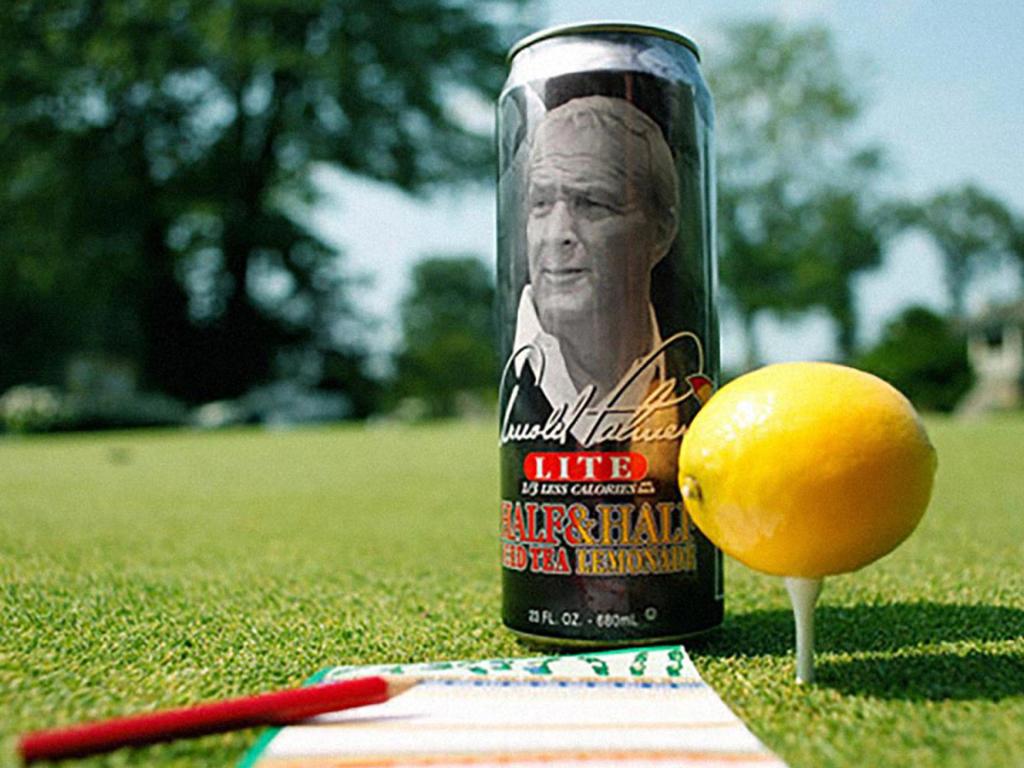
The Arnold Palmer drink came about when golf legend Arnold Palmer casually ordered a mix of iced tea and lemonade at a restaurant in the 1960s. A woman nearby overheard him, tried it herself, and soon, everyone started calling it “the Arnold Palmer!” The classic recipe combines half iced tea and half lemonade—refreshing and perfectly balanced, just like his golf game!
 Realizations with Tiffany K. Charles