

Ah, yes, the art of Tennis. A beautiful sport that’s full of strength and hard-core concentration. Mixed with a little steady adrenaline and constant foresight. Some of you may be wondering why this is a sport. Most find it tedious and very dull, but those who find pleasure in it tend to find it soothing and exciting. To love this game is to know it. Tennis is a timeless sport that seamlessly combines elegance, tactical depth, and exceptional athleticism, drawing in spectators with every serve and rally.
Whether played on the sun-drenched clay courts of Roland Garros or the iconic grass of Wimbledon, tennis challenges both the body and the mind, requiring a delicate balance of physical endurance and mental acuity. But what is it about tennis that makes it so enthralling, and how has it maintained its global popularity for generations? Often referred to as “the sport of a lifetime,” tennis offers a rare blend of dynamic physicality and intellectual strategy. Whether you’re witnessing a nail-biting Grand Slam final or enjoying a casual game at your local courts, tennis delivers an engaging experience that resonates with players and fans alike.
In this ninth installment of The History of Sports 101, we will understand this very intricate and skilled sport. You will know how it’s played and how each point is scored. From the fierce competition among world-class athletes to friendly weekend matches, its universal appeal continues to thrive, making it a sport that captivates audiences and participants across the globe. So, with that being said, we are off the court for a delicious game of tennis!!! Oh, and maybe we’ll see a celeb or two…..

The Invention of Tennis
The origins of tennis can be traced to a game called “jeu de paume” (game of the palm), which was played in France in the 12th century. Players initially struck a ball with their hands, but by the 16th century, rackets were introduced. The game continued to evolve, and by the late 19th century, it took on a form much more familiar to today’s players.
It was Major Walter Clopton Wingfield, a British army officer, who is credited with inventing modern lawn tennis. In 1873, he patented the game and its equipment under the name “Sphairistikè” (Greek for “playing ball”). The rules were published, and the sport quickly gained popularity, especially among the upper class in England.
The First Match and Early Competitions
While informal tennis matches were played following the codification of the sport by Wingfield, one of the earliest organized competitions occurred at Leamington Tennis Club in Birmingham in 1874. This marked the first official lawn tennis match, setting the stage for the competitive structure the game would soon adopt.
The First Wimbledon Championship: 1877
Wimbledon, the most prestigious tennis tournament in the world, held its first competition in 1877. Organized by the All-England Croquet and Lawn Tennis Club, the tournament was initially conceived as a fundraiser for equipment repairs. The tournament featured 22 male competitors, all from England, with no women participating until 1884.

The first-ever Wimbledon men’s singles final saw Spencer Gore defeat William Marshall 6-1, 6-2, 6-4 to become the inaugural Wimbledon champion. Gore, however, wasn’t too fond of the game itself. He later claimed tennis was “dull” and “not a game to be taken seriously.” Despite Gore’s opinion, the tournament flourished and has since become an annual spectacle known for its rich traditions, from the all-white dress code to the consumption of strawberries and cream.
The Elegance of the Game
One of the first things that strikes a casual observer of tennis is the elegance of the sport. Unlike many other fast-paced sports, tennis has a certain fluidity and grace that is almost ballet-like. The way players glide across the court, executing precise footwork, and the rhythm of the ball as it is hit back and forth create a mesmerizing spectacle.
Its setting further enhances the aesthetics of Tennis. Whether it’s the lush greenery of Wimbledon or the vibrant blue hard courts of the Australian Open, tennis courts are visually stunning. This, combined with the often silent, focused atmosphere of the matches, makes tennis a uniquely beautiful sport to watch.
The Mental Chess Match
Beyond its physical demands, tennis is a game of strategy and mental fortitude. Each point in a tennis match is a micro-battle, where players must outthink their opponents, predicting their next move while masking their intentions. This mental aspect of tennis is what often separates the good players from the great ones. Tennis legends like Roger Federer, Rafael Nadal, and Serena Williams are not just exceptional athletes; they are also master tacticians. Their ability to adapt their game plans on the fly, stay calm under pressure, and exploit their opponent’s weaknesses is what makes them stand out.

The Physical Demands
While tennis is undoubtedly a mental game, it is also one of the most physically demanding sports in the world. Players need to have a combination of speed, agility, strength, and endurance to succeed. A typical tennis match can last anywhere from one hour to over five hours, with players covering miles of ground in the process.
The physical toll of the sport is evident in the long rallies, powerful serves, and explosive sprints that define modern tennis. Players must be in peak physical condition to withstand the rigors of a match, and this has led to an era of highly athletic competitors who push the boundaries of what is possible on the court.
The Emotional Rollercoaster
Tennis is also a sport that takes its players and fans on an emotional journey. The intensity of the competition, the stakes of the tournaments, and the personal stories of the players all contribute to a rollercoaster of emotions. A match can swing dramatically from one player to the next, with momentum shifts that keep fans on the edge of their seats.
The emotional aspect of tennis is perhaps best illustrated in Grand Slam finals, where careers can be defined or shattered in a matter of moments. The tears of joy, the agony of defeat, and the sheer passion that players display make tennis a deeply human sport that resonates with audiences around the world.

The Skills Behind the Game
At its core, tennis is a complex mix of physical fitness, mental toughness, and strategic decision-making. While casual players might focus on perfecting their serve or rallying, professionals treat tennis like chess on a court.
- Physical Fitness: Speed, agility, endurance, and strength are all crucial for success. Tennis requires players to sprint short distances, change direction quickly, and maintain stamina during long rallies and matches, sometimes lasting five hours in grueling conditions.
- Technical Mastery: Tennis is known for its variety of strokes—forehand, backhand, serve, volley, slice, and drop shot. Mastering these strokes allows players to control the pace, angle, and spin of the ball, which can be the difference between winning and losing a match.
- Mental Toughness: Unlike team sports, tennis players are primarily on their own during matches. It’s just the player and their opponent, meaning that focus, resilience, and composure under pressure are essential. The mental aspect of tennis, especially in close games, is often referred to as the “fifth set” — an invisible but defining factor.
- Strategic Play: Strategy in tennis goes beyond hitting the ball over the net. Players must study their opponents, exploit weaknesses, and manage their energy levels. Different surfaces also require unique strategies; a fast grass court favors big servers, while a slow clay court rewards players with patience and stamina.

The Most Important Players in Tennis History
Throughout the decades, several players have left an indelible mark on the sport with their incredible achievements and memorable matches.
Novak Djokovic (Serbia): Djokovic has won a record 24 Grand Slam singles titles (as of 2024), making him the most successful male player in tennis history.
Rod Laver (Australia): The only player to win two calendar-year Grand Slams (1962 and 1969), Laver is widely regarded as one of the best players of all time.
Björn Borg (Sweden): Borg’s dominance at Wimbledon in the 1970s (five consecutive titles) and his fierce rivalry with John McEnroe are hallmarks of tennis history.
Pete Sampras (USA): Known for his powerful serve and volley game, Sampras set a then-record of 14 Grand Slam titles.
Serena Williams (USA): With 23 Grand Slam singles titles, Serena is the most decorated female player in the Open Era and is widely considered one of the greatest athletes in history.
Rafael Nadal (Spain): Known as the “King of Clay,” Nadal has won a record 14 French Open titles, solidifying his status as one of the greatest players on the surface.
Roger Federer (Switzerland): Federer revolutionized the sport with his fluid style of play, winning 20 Grand Slam titles and becoming a global ambassador for the game.

The Most Decorated Player
As of 2024, Novak Djokovic stands as the most decorated male player in tennis history with 24 Grand Slam singles titles, surpassing the likes of Roger Federer and Rafael Nadal. On the women’s side, Serena Williams leads the pack in the Open Era with 23 Grand Slam titles, just one short of the record held by Australian legend Margaret Court (24 titles).
The Highest-Paid Male and Female Players
Tennis is not only a sport of prestige but also one of the most lucrative in terms of prize money and endorsements.
Highest-Paid Female Player: For several consecutive years, Naomi Osaka of Japan (Naomi Osaka represented Japan at the Olympics in tennis. In 2019, she gave up her United States citizenship to represent Japan at the Tokyo Games.) has topped the list of the highest-paid female athletes globally. Her massive endorsement deals, particularly with Nike and other major brands, have outstripped even the most prominent male stars in some instances. Osaka’s activism off the court and her four Grand Slam titles have made her a household name worldwide.
Highest-Paid Male Player: In recent years, Roger Federer has consistently been the highest-paid athlete in tennis, even beyond his prime playing years. His lucrative endorsements with brands like Rolex, Uniqlo, and Wilson, along with his long-standing dominance in the sport, have made him a global icon.
Rising Stars of Tennis
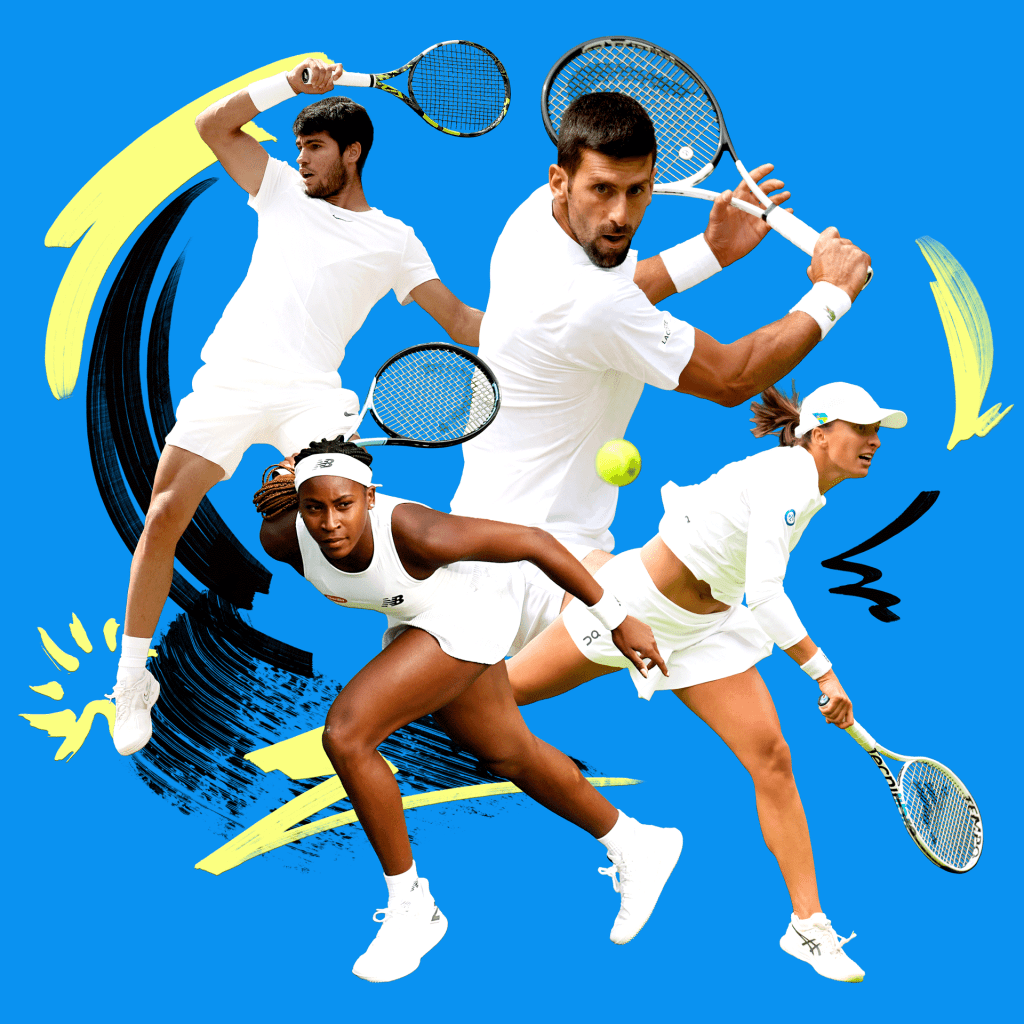
As the sport evolves, new talents continually emerge to challenge the established order. Some of the rising stars to watch include:
Jannik Sinner (Italy): Sinner’s all-court game and impressive composure have seen him make steady progress up the rankings, with multiple deep runs in Grand Slam tournaments.
Carlos Alcaraz (Spain): At just 20 years old, Alcaraz has already won multiple Grand Slam titles, including the U.S. Open and Wimbledon. His decisive baseline game, quick footwork, and mental toughness have many predicting a future No. 1 ranking for the young Spaniard.
Coco Gauff (USA): At just 19, Gauff has become a fan favorite, bursting onto the scene with her run to the fourth round at Wimbledon in 2019. She secured her first Grand Slam title at the 2023 U.S. Open, cementing her place as one of the sport’s brightest young talents.
The Grand Slams: A Yearly Test of Excellence
The four Grand Slam tournaments each provide a distinct challenge to players:
- Australian Open: Held in January, this hard-court tournament tests players in sweltering heat, requiring top-level fitness and focus.
- French Open: Played on clay courts in Paris, this tournament is famous for its long rallies and grueling matches. The slow surface neutralizes big servers and rewards players with stamina and precision.
- Wimbledon: The oldest tennis tournament in the world, Wimbledon is played on grass courts, which favor players with solid serves and aggressive net play. Its rich tradition and pristine aesthetics make it the most prestigious tennis event.
- U.S. Open: The final Grand Slam of the year, played on hard courts in New York, the U.S. Open offers fast-paced action in front of one of the sport’s most boisterous crowds.

The Evolution of Tennis
Tennis has evolved in many ways over the years, from the refinement of its rules to the technology that now plays a significant role in the sport. Here are some fundamental changes:
Diversity: The sport has seen significant growth in diversity, both in terms of the players competing and the global reach of tournaments. Players from regions that historically weren’t represented—such as Asia and Eastern Europe—are now regularly competing at the top levels.
Technology: Hawk-Eye technology was introduced in 2006 to help resolve line disputes, and it has now become a vital part of the game. Players are allowed to challenge calls, bringing a new element of strategy to the sport.
Equipment: Early tennis players used wooden rackets, which have since been replaced by lighter, more durable materials such as graphite and carbon fiber. The evolution of tennis balls, shoes, and apparel has also allowed players to enhance their performance.
Fitness: Modern players are incredibly athletic, with training regimens that are far more intense than those of earlier generations. The speed, power, and endurance required to compete at the highest level have all increased dramatically, raising the overall level of competition.
The Global Appeal
Tennis is truly a global sport, with a fan base that spans continents and cultures. Major tournaments like Wimbledon, the U.S. Open, the French Open, and the Australian Open are watched by millions of fans around the world. The sport’s popularity is also reflected in its diverse roster of champions, hailing from countries as varied as Switzerland, Spain, Japan, and the United States. This global appeal has helped tennis grow into one of the most lucrative sports in the world, with top players earning millions in prize money and endorsements. More importantly, it has made Tennis a universal language, bringing people together to celebrate the beauty and excitement of the game.

Final Thoughts
Tennis is undergoing a dynamic transformation as a new generation of players, including Carlos Alcaraz, Coco Gauff, Iga Świątek, and Jannik Sinner, make their mark on the sport. Their emergence is introducing fresh rivalries and injecting new energy into the game. Advances in technology, such as Hawk-Eye line-calling and data-driven coaching, are further elevating the precision and strategy of tennis, reshaping how the game is played and experienced.
As the sport’s popularity expands, tennis continues to showcase an increasing diversity in both players and playing styles. Its unique combination of elegance and athleticism continues to attract a broad audience, appealing to both seasoned fans and newcomers. From its medieval roots to its current global prominence, tennis has evolved into one of the most popular and lucrative sports in the world. While legends like Roger Federer, Serena Williams, Rafael Nadal, and Novak Djokovic have defined past eras, the future of tennis shines brightly with rising stars like Alcaraz and Gauff. With its rich history, innovative technology, and immense talent pool, tennis remains a captivating spectacle that promises to thrive for years to come.
 Realizations with Tiffany K. Charles