

“I’m gonna knock you out (Huuh)! Mama said knock you out (Huuh)! I’m gonna knock you out (Huuh)! Mama said knock you out (Huuh)!” Yeah boy! This classic says it all about MMA and UFC. Remember the first time you ever saw an MMA fight or UFC match? That adrenaline rushed through you as you watched two people pulverize each other for about 30 to 45 minutes. The way it invoked your inner street fighter and made you want to enroll in jiu-jitsu or mixed martial arts in your area. How you wanted to be the great contender. Maybe you did, and maybe you didn’t, but nevertheless, you enjoyed the fight.
Over the past few decades, what began as a niche, often misunderstood sport has evolved into a global phenomenon, with the Ultimate Fighting Championship (UFC) playing a pivotal role. The UFC, founded in 1993, has been at the forefront of this evolution, transforming MMA from a controversial spectacle into a mainstream attraction. The journey from obscurity to widespread recognition is a testament to the resilience, adaptability, and relentless drive of athletes and promoters alike. This rise in popularity has also been fueled by the UFC’s strategic partnerships with major media networks, the expansion of its global events calendar, and the incorporation of diverse fighting styles, which has attracted a broad and passionate fanbase.
The sport’s ability to continually innovate, from the implementation of advanced training techniques to the use of cutting-edge technology in broadcasting, has cemented its place as a dominant force in the world of professional sports. This rapid evolution, primarily influenced by MMA first and then UFC, has seen the sport grow exponentially, capturing the imagination of millions worldwide with its unique blend of athleticism, strategy, and raw physicality. The UFC has been mainly instrumental in transforming the sport from a controversial spectacle into a mainstream attraction, continually pushing the boundaries of combat sports.
This blog post, the seventh installment of The History of Sports 101 series, will examine the defying culture of MMA and UFC. You will understand the dynamics and lure of both sports, how they intertwine with each other, and how one wouldn’t be without the other. Are you ready for the fight of your life? Probably not; however, you have to get ready for practice. Grab your gym bag, and don’t forget your hand wraps. Last time, you broke three knuckles, and that was gross! Plus, you need some rash guards, another groin piece, and a new mouthguard… We’ll see if DICK’s has them later.
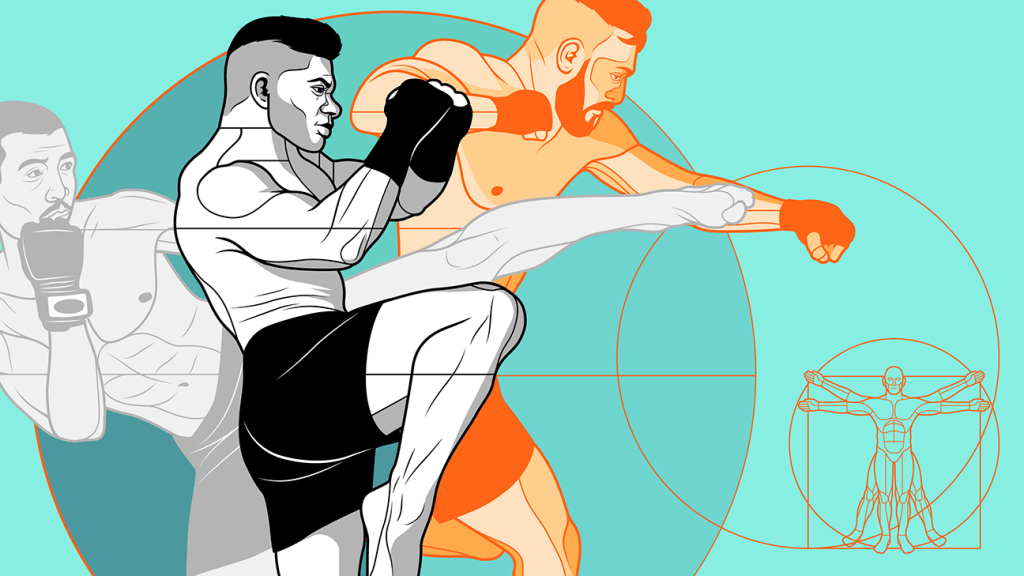
The Origins of MMA: A Battle of Styles
Mixed martial arts, commonly known as MMA, has its origins in the ancient world. The concept of combining various fighting styles can be seen in disciplines such as Pankration, a combat sport that was part of the ancient Olympic Games in Greece around 648 BC. Pankration combined striking and grappling techniques, making it one of the earliest examples of a no-holds-barred fighting style.
The roots of MMA in the modern era can be found in the early 20th century when martial artists from different disciplines began challenging each other to determine the most effective fighting style. These contests, often held in secrecy, set the stage for what would later evolve into the sport we now know as MMA.
The Birth of the UFC
The Ultimate Fighting Championship (UFC) was founded in 1993 by Art Davie and Rorion Gracie with the aim of determining the most effective martial art in a real fight. The first UFC event took place on November 12, 1993, in Denver, Colorado. Unlike today’s well-regulated sport, the early UFC had minimal rules, no weight classes, and no time limits. It was raw, brutal, and captivating, quickly gaining attention for its no-holds-barred action. Those were the days, weren’t they? The thrill of the unknown, the raw energy, and the unfiltered passion of the fighters. It’s a nostalgia that every MMA and UFC fan can relate to.
The early UFC events were dominated by Brazilian Jiu-Jitsu (BJJ) practitioners, particularly Royce Gracie, who used his family’s grappling techniques to defeat much larger opponents. Gracie’s success showcased the effectiveness of BJJ and laid the groundwork for the development of MMA as a sport where fighters combined multiple disciplines, including striking, grappling, and wrestling.

The Turning Point: Regulation and Mainstream Acceptance
As the UFC grew in popularity, it became clear that the sport needed to evolve to survive and thrive. The late 1990s and early 2000s were a period of significant change, as the UFC introduced rules to increase fighter safety and appeal to a broader audience. Weight classes, time limits, and the introduction of gloves were just a few of the changes that helped legitimize the sport. The Unified Rules of Mixed Martial Arts, adopted in 2000, provided a standardized framework that allowed MMA to be sanctioned and regulated by athletic commissions.
These changes, coupled with the UFC’s aggressive marketing and the rise of stars like Chuck Liddell, Tito Ortiz, and Randy Couture, helped MMA shed its outlaw image. The sport began to gain traction on mainstream platforms, culminating in the landmark 2005 season of “The Ultimate Fighter,” a reality TV show that introduced MMA to millions of new fans. The season’s dramatic finale, featuring a legendary bout between Forrest Griffin and Stephan Bonnar, is often credited with saving the UFC from financial ruin and launching MMA into the mainstream.
The Modern Era: Global Expansion and the Rise of Superstars
The UFC’s success in the United States paved the way for global expansion. Over the past decade, the UFC has held events in countries around the world, from Brazil and Canada to China and Russia. This global expansion is a testament to the sport’s growing popularity and acceptance. It’s a moment of pride for every MMA and UFC fan to see their beloved sport transcending borders and cultures, thanks to the UFC’s relentless efforts and the sheer talent of its fighters.
Conor McGregor, in particular, has played a pivotal role in elevating the sport’s profile. His bold personality, unmatched charisma, and impressive knockout power have made him one of the most recognizable athletes in the world. McGregor’s 2017 boxing match against Floyd Mayweather Jr., while not an MMA fight, was a testament to the UFC’s influence and the global appeal of its fighters.
In recent years, the UFC has continued to innovate, embracing new technologies and media platforms to reach fans. The launch of UFC Fight Pass, a digital streaming service, and partnerships with major broadcasters like ESPN have made MMA more accessible than ever. The organization has also introduced new weight classes and women’s divisions and even experimented with different formats, such as the UFC Performance Institute and the Contender Series, to cultivate the next generation of fighters.

The Greatest and Highest-paid in UFC
In the world of UFC, some of the greatest fighters have not only dominated the octagon but also redefined the sport with their skills, charisma, and impact. Among these legends, Anderson Silva stands out as one of the most iconic figures. Known as “The Spider,” Silva reigned as the UFC Middleweight Champion for nearly seven years, holding the record for the longest title reign in UFC history. His blend of striking precision, unorthodox techniques, and ability to finish fights spectacularly earned him widespread acclaim. Another name that resonates with greatness is Georges St-Pierre, a two-division champion who is often considered the greatest welterweight of all time. GSP’s well-rounded skill set, combining elite wrestling with striking and submission defense, allowed him to dominate opponents and leave the sport with a near-perfect record.
When it comes to the highest-paid fighters in UFC history, Conor McGregor undoubtedly tops the list. McGregor’s ability to sell fights through his brash personality and trash talk, combined with his knockout power, made him the biggest draw in the sport. His bout with Khabib Nurmagomedov at UFC 229 remains the highest-grossing event in UFC history. McGregor’s ventures outside the octagon, including his boxing match against Floyd Mayweather, also contributed significantly to his wealth. Speaking of Khabib, the undefeated lightweight champion is another high earner, particularly after his fight with McGregor, which significantly boosted his profile. Despite retiring at the peak of his career, Khabib left an indelible mark on the sport, both in terms of performance and earnings.
The Greatest and Highest-Paid Fighters in MMA and UFC History
When discussing the greatest fighter in MMA history, one name consistently rises to the top: Anderson Silva. Silva, a Brazilian striker known for his extraordinary precision and timing, dominated the UFC’s middleweight division for nearly seven years. He holds the record for the longest title reign in UFC history, with 16 consecutive victories and ten successful title defenses. Silva’s ability to finish fights spectacularly, whether through knockout or submission, earned him a reputation as one of the most complete and feared fighters in the sport. His highlight-reel moments, such as his front-kick knockout of Vitor Belfort, have cemented his legacy as a true icon of MMA.
While Anderson Silva may be considered the greatest, Conor McGregor holds the title of the highest-paid fighter in MMA history. The Irishman, known for his charisma, trash talk, and knockout power, transcended the sport of MMA to become a global superstar. McGregor’s ability to market himself, coupled with his fighting prowess, led to record-breaking paydays, including his crossover boxing match with Floyd Mayweather in 2017. McGregor’s appeal has brought MMA into the mainstream, attracting new fans and generating massive pay-per-view numbers. His fights consistently rank among the highest-grossing in UFC history, making him the sport’s top earner.

The Rise of Women’s MMA and UFC Plus the Best-Known Fighters
Women’s MMA has seen a meteoric rise in popularity over the past decade, thanks in large part to trailblazers like Ronda Rousey. Rousey, a former Olympic judoka, burst onto the scene in 2012 and quickly became the face of women’s MMA. Her dominance in the octagon, combined with her star power, led to the creation of the UFC’s first women’s division. Rousey’s reign as the UFC bantamweight champion was marked by quick finishes, often within the first round. Her armbar submissions became her signature move, and she successfully defended her title six times before suffering her first defeat. Rousey’s impact on the sport cannot be overstated; she paved the way for other women to compete at the highest level and proved that women’s MMA could be just as exciting and marketable as men’s.
Following Ronda Rousey, several women have made their mark in the UFC. Amanda Nunes, often referred to as “The Lioness,” is widely regarded as the greatest female fighter in MMA history. Nunes has held titles in two weight classes (bantamweight and featherweight) and has defeated every former UFC women’s bantamweight champion in her path. Her power, technique, and resilience have set her apart from her peers. Another notable fighter is Valentina Shevchenko, a former Muay Thai champion who has dominated the UFC’s flyweight division. Known for her striking accuracy and versatility, Shevchenko has successfully defended her title multiple times and is considered one of the sport’s most well-rounded fighters.
The Future of MMA and the UFC
As MMA continues to grow, the UFC remains at the forefront of the sport, constantly innovating and expanding its reach. The organization has embraced new technologies, such as streaming services and social media, to connect with fans and grow its audience. The UFC has also made efforts to expand into new markets, hosting events in countries such as China, Russia, and the United Arab Emirates. The future of MMA looks bright, with the sport continuing to attract new fans and athletes from around the world. The UFC’s influence on the sport is undeniable, and as it continues to evolve, it will likely play a pivotal role in shaping the future of combat sports.
The sport’s evolution is also evident in the athletes themselves. Modern MMA and UFC fighters are true mixed martial artists, skilled in striking, grappling, wrestling, and submission techniques. The days of specialists dominating the sport are long gone; today’s champions are versatile and adaptable, capable of winning in any area of the fight. MMA and UFC’s appeal lies in its unpredictability and the diverse skill sets required to succeed. Fighters must be proficient in various fighting styles. This diversity makes MMA and UFC a constantly evolving sport where fighters must continually adapt and improve to stay competitive.

Final Thoughts
MMA and the UFC have undergone a remarkable transformation, evolving from controversial beginnings into a global phenomenon that has captivated audiences and redefined combat sports. From its ancient origins to its current status, the sport has produced iconic figures like Anderson Silva, Conor McGregor, and Ronda Rousey, who have pushed the limits of what is possible.
The journey of MMA and the UFC is one of perseverance, adaptation, and triumph. The UFC, as the sport’s leading organization, has been instrumental in this evolution, helping to shape MMA into the mainstream sport it is today. As MMA continues to grow and evolve, it remains one of the most dynamic sports in the world, with a future full of promise and potential.

 Realizations with Tiffany K. Charles