

Whether you’re a die-hard fan who lives and breathes the game or a newcomer trying to understand the difference between a touchdown and a field goal, you’ve landed in the right place. American football isn’t just a sport—it’s a cultural phenomenon that has captured the hearts of millions across the nation. From the high-octane action on the field to the strategic chess match between coaches, football offers a blend of physicality, intelligence, and raw emotion that few other sports can match.
American football is a sport that captures the essence of a nation, uniting millions under the bright lights of stadiums across the country. It’s more than just a game—it’s a passion, a cultural cornerstone, and a way of life for countless fans, from the thunderous cheers echoing through packed arenas to the backyard games where future stars first dream of greatness. The impact of American football is undeniable. Whether you’re drawn to the strategic brilliance of the playbooks, the raw athleticism on display, or the stories of perseverance and glory, there’s something about American football that resonates deeply with the heart.
No matter how you watch the games, football is more than just a sport in the United States; it’s a cultural phenomenon that brings together millions of fans every season. From the electrifying atmosphere of Friday night high school games to the grandeur of the Super Bowl and College Bowls, which feature the sport’s up-and-coming stars, football has a unique ability to captivate audiences with its blend of strategy, athleticism, and spectacle.
In this fifth installment of The History of Sports 101 blog series, we’ll explore the beautiful game in all its glory, from its humbled creation and emerging talents to the rich history and traditions that make American football the world’s fastest-growing favorite sport. So get your merch and paint your faces. Make those signs and prepare for the tailgating. Be ready to defend your teams at all costs! Remember: Go hard or go home. Or to jail if you really go too hard, but make sure you have that bail money, too.
Origins and Creation of American Football
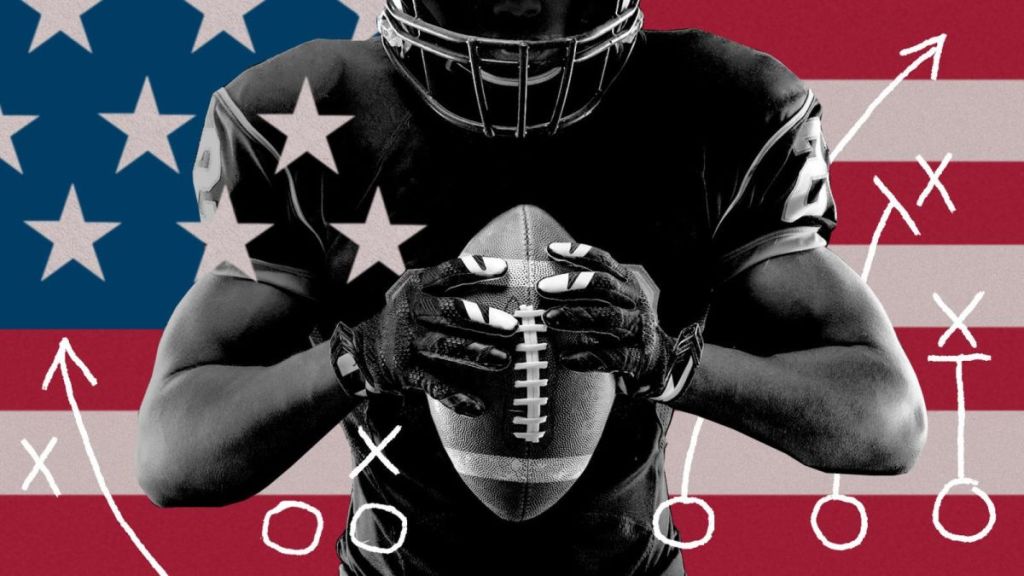
American football, a sport deeply woven into the fabric of American culture, dates back to the late 19th century. The game evolved from a combination of soccer and rugby brought to North America by European immigrants. The earliest forms of football in the United States involved various versions of what was then called “mob football” played in schools and colleges.
The modern version of American football began to take shape when Walter Camp, often referred to as the “Father of American Football,” introduced significant changes. In 1880, Camp proposed vital rules such as the line of scrimmage, the snap from center to quarterback, and the concept of downs. These innovations differentiated American football from rugby and soccer, laying the foundation for the sport we know today.
How the Game is Played
American football is played on a rectangular field with goalposts at each end. It consists of two teams of eleven players each, with the primary objective of scoring points by advancing the football into the opposing team’s end zone. The game is divided into four quarters, each lasting 15 minutes, with a halftime break.
Scoring Points
Touchdown (6 points): This is achieved when a player carries the ball into the opposing team’s end zone or catches a pass in the end zone.
Extra Point (1 or 2 points): After a touchdown, the scoring team can kick the ball through the uprights for 1 point or attempt a play from the 2-yard line to earn 2 points.
Field Goal (3 points): Scored when the ball is kicked through the opponent’s goalposts during a play.
Safety (2 points): This occurs when the defense tackles an offensive player with the ball in their end zone.

The AFL and NFL
The National Football League (NFL) was founded in 1920 as the American Professional Football Association (APFA) and was renamed the NFL in 1922. The NFL grew in popularity, but in 1960, a rival league called the American Football League (AFL) was established. The AFL introduced innovative playing styles and marketing strategies, increasing the sport’s popularity.
In 1970, the AFL and NFL merged, creating a unified league with two conferences: the American Football Conference (AFC) and the National Football Conference (NFC). Today, the NFL is comprised of 32 teams, with 16 teams in each conference.
The Super Bowl
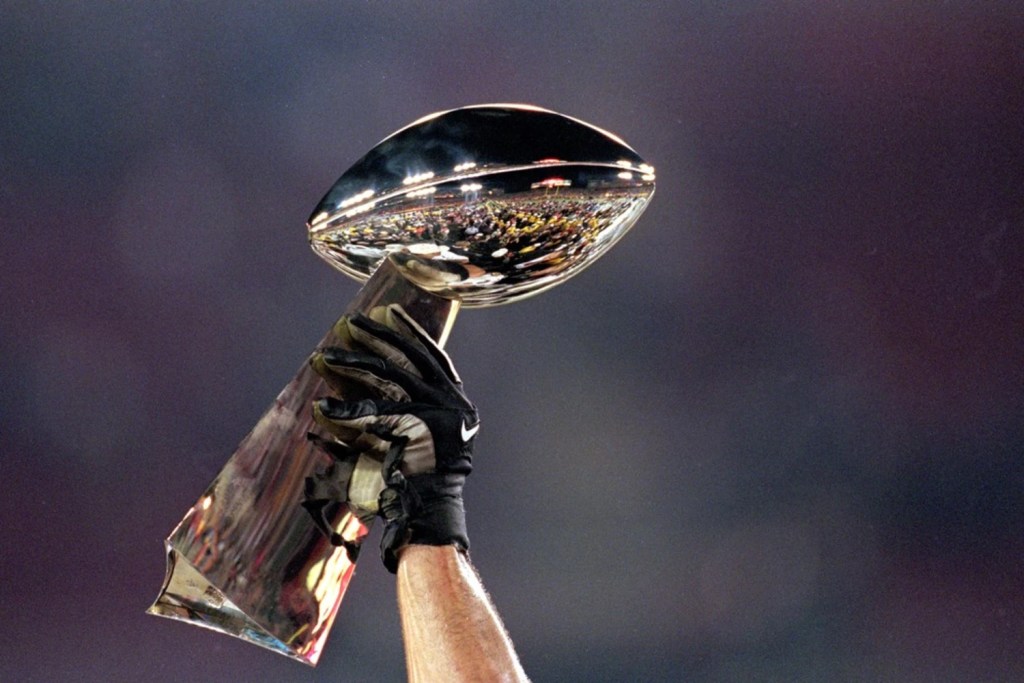
The Super Bowl, the championship game of the NFL, was created as part of the AFL-NFL merger. The first Super Bowl was played on January 15, 1967, between the AFL-champion Kansas City Chiefs and the NFL-champion Green Bay Packers. The Packers won the inaugural game, 35-10. The Super Bowl has since become one of the most-watched sporting events globally, showcasing top-tier football talent and extravagant halftime shows.
Greatest Players and Highest-Paid Stars
Greatest Players
Jim Brown: A dominant running back for the Cleveland Browns, Brown set numerous records during his career in the 1950s and 60s.
Joe Montana: Known for his clutch performances, Montana led the San Francisco 49ers to four Super Bowl victories in the 1980s.
Jerry Rice: Widely considered the most excellent wide receiver in NFL history, Rice holds numerous receiving records.
Tom Brady: With seven Super Bowl wins, Brady is often hailed as the greatest quarterback of all time.

Highest-Paid Players
Past: In the early days, players like Joe Namath and Terry Bradshaw were among the highest-paid, with salaries that pale in comparison to today’s standards.
Present: In recent years, quarterbacks like Patrick Mahomes and Aaron Rodgers have signed record-breaking contracts and earned tens of millions per year.
Future: With the continued growth of the NFL’s revenue, future stars like Trevor Lawrence and upcoming draft picks are expected to sign even more lucrative deals.
The NFL Draft and Future Stars
The NFL Draft is an annual event in which teams select eligible college football players to join the league. The draft is critical for team building and competitive balance. Teams take turns selecting players over seven rounds, with the order based on the previous season’s standings, giving weaker teams a chance to improve.
Up-and-Coming Players
- Trevor Lawrence: The highly touted quarterback from Clemson, selected first overall in the 2021 NFL Draft, is expected to become a cornerstone player.
- Ja’Marr Chase: The wide receiver for the Cincinnati Bengals has already made significant impacts and is seen as a future star.
- Micah Parsons: The Dallas Cowboys linebacker has shown immense potential and is poised to become one of the league’s defensive stars.

College Football: A Tradition of Excellence
College football holds a special place in the hearts of many Americans. With traditions spanning over a century, collegiate games often draw massive crowds and intense rivalries. The NCAA (National Collegiate Athletic Association) oversees the college football landscape, which features numerous conferences and bowl games, including the prestigious College Football Playoff (CFP) that determines the national champion.
The Physicality and Skill
Football demands a unique combination of physical prowess and skill. Players must exhibit speed, strength, agility, and precision. Positions such as quarterback, running back, wide receiver, and linebacker each require specialized skills. The physicality of the game, characterized by powerful tackles and blocks, adds to its excitement and intensity.
The Strategic Depth
One of the most fascinating aspects of football is its strategic complexity. Coaches and players must constantly adapt, employing intricate playbooks and game plans. The sport’s chess-like nature involves offensive strategies like the spread offense or West Coast offense and defensive schemes such as the 4-3 or 3-4 defense. This strategic depth makes football intellectually stimulating and unpredictable.
The Cultural Impact
Football’s influence extends beyond the gridiron. It is ingrained in American culture, symbolizing teamwork, perseverance, and community spirit. High school football games are community events that bring together families, students, and residents. College football fosters school pride and loyalty, with alumni and fans passionately supporting their teams. The NFL, with its nationwide fan base, contributes significantly to the economy and entertainment industry.
Final Thoughts
American football’s enduring popularity is a testament to its multifaceted appeal. It is a sport that combines physicality with strategy, tradition with innovation, and individual brilliance with teamwork. Whether you are a casual observer or a die-hard fan, the allure of football lies in its ability to unite people, create unforgettable moments, and continually evolve. As the game progresses, it will undoubtedly continue to capture the hearts and minds of future generations.
American football has grown from its humble origins into a billion-dollar industry with a global following. The sport continues to evolve, driven by innovation, talent, and the passion of its players and fans. From the early days of Walter Camp to the high-flying action of the Super Bowl, American football remains a testament to the spirit of competition and excellence.
 Realizations with Tiffany K. Charles