

“You have all the Time in the World.” “Time waits for no man.” “You’re running out of time!” “Time you enjoy wasting is not wasted time.” “We must use time as a tool, not as a couch.” “Time is what we want most but what we use worst.” “Time is on my side.” We’ve all heard some of these sayings, if not all of them. They each have their warnings about Time. Ever since you could add math, you were taught how to tell Time, how to value it, how not to waste it, and how to honor it. You were ruled by Time. You had a bedtime, a Time to get up, a specific Time to get ready for school so that you can be on Time, a Time to eat, and a Time to play. But did you ever stop to think if it really exists?
Humanity’s perception of Time has evolved significantly throughout the ages. From early man’s primal obsession with the cycles of day and night to the sophisticated global timekeeping systems of today, our understanding and management of Time reflect our journey from survival to civilization. From Daylight savings to different time zones, Time controls us all, even if it’s just a perception. As far as we know, our bodies rise with the sun and rest when it sets. We tend to eat at certain sun intervals, but that’s all. So, who invented the concept of Time? How did they come up with the Time Zones and daylight savings in the first place?
If Time exists and is very real, then why isn’t it embedded in our DNA? Just like speaking, defecating, and the need for water, talking, etc. Why are we teaching ourselves something that seems… well, made up? If Time is genuinely an authentic thing, then why are we, as children, not aware of it? Why are we so oblivious to its existence? We only acknowledge that there is a day and night once we learn about Time. So why are we so gun-ho about preserving it if we can’t control it? Do we even have a biological clock (another creation of Time)?
In this blog, we will examine the exploration of Time perception, revealing how it started as a fundamental part of human existence and has morphed into an elaborate illusion, one that governs the modern World yet doesn’t hold any tangible reality. We will try our best to understand the concept of it and if, indeed, it really does exist. As I’m sure you already know, ” Time waits for no man.” (all puns intended). So charge your phones, charge up your Google and Apple watches, and charge those ear pods, too; make sure you set your alarm so you get up on Time to make it to the bus stop. Grab your backpacks. You have 15 minutes to make it to the bus stop. Be prepared, as Ms. Lizz will take us on another ride through TIME on the Magic School Bus!!!

Early Man’s Time Obsession
The earliest humans were deeply connected to the rhythms of the natural World. Their survival hinged on the ability to predict seasonal changes, animal migrations, and plant growth cycles. This obsession with consuming Time wasn’t merely an intellectual exercise; it was a matter of life and death. Observing the sky, they began to notice patterns—the phases of the moon, the sun’s path across the sky, and the changing constellations. These celestial cues were humanity’s first calendars and clocks, providing a rudimentary structure to their existence.
The First Recorded Usage of Time
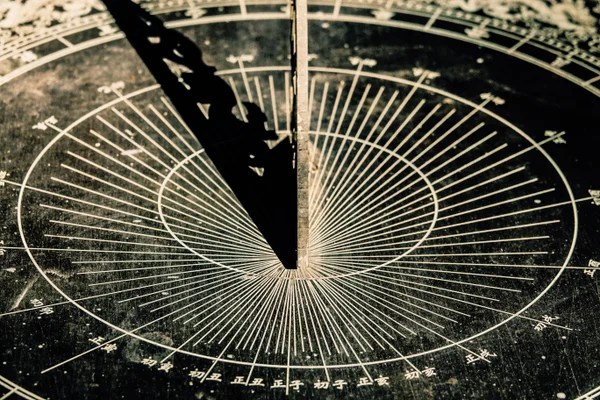
The transition from observing Time to recording it was a monumental leap in human history. The earliest known records of timekeeping date back to ancient civilizations, such as the Sumerians of Mesopotamia, around 2000 BCE. They invented the first known calendar, dividing the year into 12 lunar months. The Egyptians further refined timekeeping by developing a sundial around 1500 BCE, enabling them to measure the passage of Time during the day. These inventions marked humanity’s first attempts to standardize the elusive concept of Time.
The Advent of Time Zones
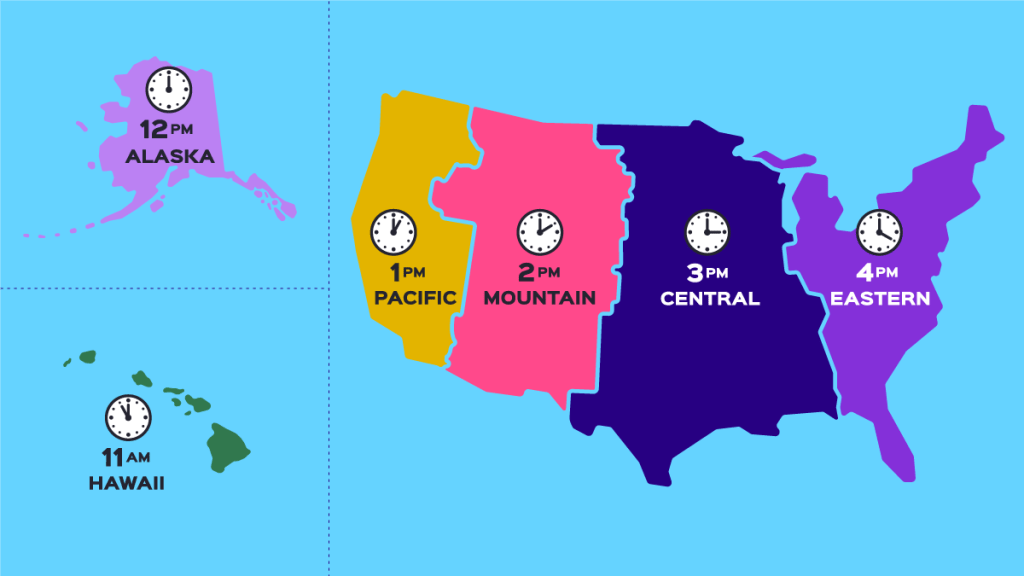
The concept of Time Zones, however, is a relatively modern invention necessitated by the advent of rapid long-distance travel during the 19th century. Before then, Time was a local affair, with noon being whenever the sun was at its highest point in the sky, varying from place to place. The establishment of Time Zones is primarily credited to Canadian railway planner and engineer Sir Sandford Fleming. In 1878, he proposed a worldwide system of Time Zones, rationalizing Time for the burgeoning age of global travel and commerce. His vision was realized at the International Meridian Conference in 1884, where Greenwich, England, was established as the prime meridian, and the World was divided into 24 Time Zones.
Time: An Illusion of Our Creation
Despite these advancements in measuring and standardizing Time, many philosophers and physicists argue that Time, as we understand it, is an illusion. Albert Einstein’s theory of relativity showed that Time is not absolute; it varies with the observer’s speed and gravitational field. This realization led to the understanding that Time, much like the rest of human perception, is subjective. It does not exist as a physical entity but as a construct of the human mind, developed to bring order to our experiences.
The notion that Time is an illusion is also supported by quantum mechanics, where, at the most minor scales of the universe, the traditional concepts of Time do not apply. Events can occur without a set sequence, challenging the very foundation of our time-based understanding of reality.
Time for an Emoji?
Emojis can be a fun and expressive way to represent various concepts, including Time. Here are some emojis commonly used to symbolize different aspects of Time:
- 🕒 (Three O’clock) – Represents a specific Time of day.
- ⏰ (Alarm Clock) – Often used to denote time-related alerts or waking up.
- ⌛ (Hourglass Done) – Symbolizes passing Time, waiting, or deadlines.
- ⏳ (Hourglass Not Done) – Indicates ongoing Time, such as countdowns or ongoing processes.
- 🕰️ (Mantelpiece Clock) – Represents Time in a more traditional or classical sense.
- ⏲️ (Timer Clock) – Used for timing events or activities.
- 🌅 (Sunrise) – Can signify morning Time or a new day.
- 🌆 (Cityscape at Dusk) – Often represents evening or the end of the day.
- 🕛 (Twelve O’clock) – Used to indicate noon or midnight.
- 🌙 (Crescent Moon) – Commonly represents nighttime or late hours.
These emojis are used in various contexts on social media, messaging, and other digital communications to convey messages about Time efficiently and with a visual appeal.

Daylight Saving… For What?
Daylight Saving Time (DST) was first conceived by George Vernon Hudson, a New Zealand entomologist, in 1895, and later independently by British builder William Willett in 1907, who proposed it as a way to make better use of daylight. The idea was to shift the clock forward in spring to move an hour of daylight from the morning to the evening, thereby reducing the need for artificial lighting in the evening and saving energy. It was first adopted by Germany and its World War I allies in 1916 to conserve coal during wartime. Other countries, including the United States and Britain, soon followed suit. The practice was meant to support war efforts by saving energy and providing more daylight hours for work and productivity.
In modern Times, the rationale for DST needs to be more compelling. Advances in technology and changes in energy consumption patterns have diminished the energy savings once associated with the practice. Moreover, the disruption to human circadian rhythms caused by the biannual clock change has been linked to various health issues, including sleep disruption, increased heart attack rates, and reduced productivity. The digital economy and flexible work schedules have further lessened the impact of DST on energy conservation. As a result, some regions and countries have begun questioning the need for DST, with several opting out of the practice altogether, citing the minimal benefits and the tangible drawbacks associated with the Time change. This ongoing debate reflects a broader reevaluation of DST’s relevance in a world where energy efficiency and human health are increasingly prioritized over outdated practices.

The Nonexistence of Time
So, does Time really exist? From a practical standpoint, timekeeping is crucial for the functioning of modern society. It allows for coordination, planning, and the smooth operation of global systems. Yet, on a fundamental level, Time might be nothing more than a shared illusion, a construct we’ve created to make sense of our existence.
Final Thought
In conclusion, our journey from the primal obsession with the cycles of nature to the sophisticated global timekeeping of today highlights the evolution of human perception. Time, whether real or imaginary, is a testament to humanity’s relentless quest to understand and organize the World. It is a concept that has not only shaped our civilization but also continues to challenge our understanding of reality itself.
Ultimately, timekeeping remains crucial for societal functioning, allowing for coordination and planning on a global scale. Yet, at its core, Time may be nothing more than a shared illusion, a construct devised to structure our experiences and activities. As we continue to explore and understand Time’s true nature, we must question whether this construct, so integral to our civilization, is as natural as we perceive it to be or merely a convenient fiction we collectively maintain.
Fun Fact:
🌑🌒🌓🌔🌕🌖🌗🌘A fun fact about the Moon that many might not be aware of is that there is serious discussion about establishing a lunar Time Zone. This idea stems from the growing interest in lunar exploration and the potential for permanent bases on the Moon. The European Space Agency (ESA) has even proposed the idea of creating a “lunar Time🌕” system to coordinate activities between Earth and the Moon more effectively. This would help manage operations as different countries and private companies aim to land on and explore the Moon. The concept of a Moon-specific Time Zone addresses the challenges of coordinating communication, work cycles, and scientific experiments in an environment where traditional Earth-based timekeeping doesn’t apply.🌙🌚🌛🌜🌕🌑🐺
 Realizations with Tiffany K. Charles
DST and the reason why it was created is an interesting concept. However it still baffles me as to why the US and a handful of other countries changes time forwards or backwards bi-annually. Why can the time just be the time like it is in most of the world?
LikeLike