

We all want to be polite to others. It’s how most of us were raised. To say please and thank you, but most of us don’t really practice what we were taught as we grow into adulthood. We feel as though because we are grown, we abide by a different creed of manners. The “Grown-Up” is manners where we all just assume respect will be given automatically and that we all just understand how to operate in your adult mannerisms…… But one phrase is the kicker. It’s the one that cultivates respect and highlights how much you respect yourself and others…… Excuse Me.
In a world where communication evolves at the speed of a tweet, the phrase “excuse me” carries a rich tapestry of historical significance and contemporary relevance. Once rooted deeply in the etiquette of personal interactions, it now navigates the complex currents of social media. But why do we say “excuse me,” and how has its usage transformed? “Excuse me” is a phrase commonly used in daily conversations, whether you are trying to get someone’s attention or asking for forgiveness. It is an essential part of social etiquette to signal our intentions and show respect toward others.
The phrase “excuse me” is a fundamental component of polite conversation, embodying a request for forgiveness or patience as one seeks to navigate social interactions. It serves as a verbal cue to signal everything from a request to pass by someone in a crowded space to an apology for a minor social faux pas to an introduction before asking a question. There are many ways Excuse Me can be used to express your genuine emotions, and it also displays your courteousness, your home training, and your desire to have that respect reciprocated back to you.
All right, now, you have 5 minutes to get to your locker and to get to Home Ec. Here is where you will be taught the fundamentals of everyday life. Whether you were taught manners or not, here is where you will be schooled in the ways of politeness. So, pull out your textbook on manners and turn to chapter 4, page 44. Here is where you will find the origins of the phrase Excuse Me, first recorded usage, and the evolution of this phrase, particularly in a social-media-driven world, which offers fascinating insights into how language adapts and evolves.
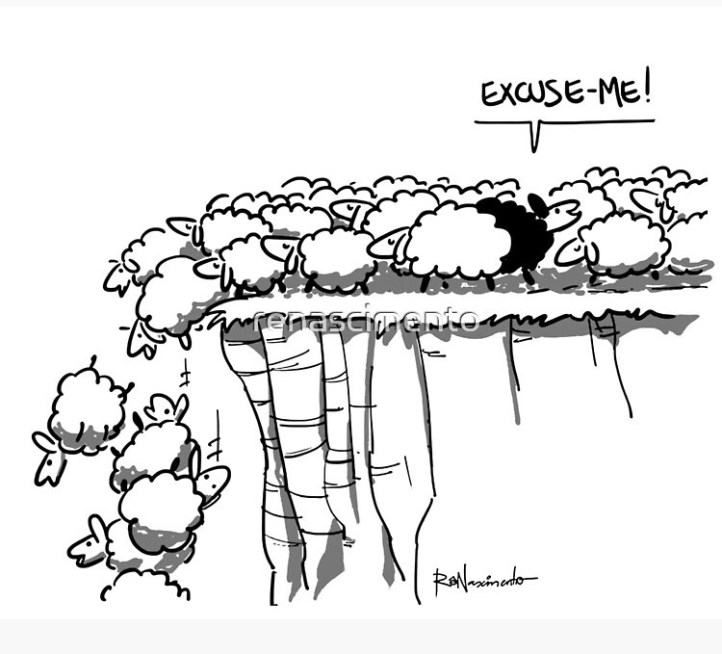
The Origins of “Excuse Me”
The phrase “excuse me” comes from the Latin word “excusare,” which means to free someone from a charge of fault or guilt. It emerged as a polite expression in English-speaking societies during the Middle Ages, initially used to ask for forgiveness for a perceived insult or to interrupt or request attention politely. The phrase “excuse me” can be traced back to the Middle Ages when the custom of taking one’s hat off and bowing or curtsying was a common way of showing respect to someone. This gesture was often accompanied by the phrase “pardon me” or “excuse me,” which was used to ask for permission to pass by or for forgiveness for any offense caused…
First Recorded Usage
Tracing the first recorded usage of phrases like “excuse me” can be challenging due to the informal nature of spoken language and the delayed documentation in written form. However, historical texts and literature often serve as windows into the usage of such phrases. “Excuse me” in its various forms has been a part of English conversation since at least the early modern period. It was documented in literature and letters, reflecting its established role in polite society. For example, Shakespeare’s works, which date back to the late 16th and early 17th centuries, include instances of characters using polite forms of address and apology, indicating that the concept of excusing oneself was well ingrained in the etiquette of the time.
Evolution in a Social Media-Driven World
In today’s digital age, the way we communicate has undergone significant transformations, influenced heavily by the rise of social media. The phrase “excuse me,” while still widely used in verbal communication, has also found its place in the written text of the digital era, albeit in evolved forms. On social media platforms, where communication is often constrained by character limits or the desire for brevity, emojis, and abbreviated language have become part of the lexicon.

Emojis Expressing “Excuse Me”
- 🙏: The folded hands emoji is frequently used to signify a request, appreciation, or apology, effectively serving the same purpose as saying, “Excuse Me.”
- 😅: This emoji, representing a face with a drop of sweat, often conveys a sense of mild embarrassment or an “oops” moment, akin to a light-hearted “excuse me.”
- 🤭: The face with an over-mouth emoji can imply a range of emotions, including surprise, embarrassment, or a polite interruption, similar to “excuse me” in conversation.
Moreover, the phrase has been abbreviated and adapted to fit the fast-paced, character-limited communication style that dominates platforms like Twitter and Instagram. From “excuse me” to “excuse my ignorance” or simply “EMI” in online forums, the evolution reflects a blend of traditional courtesy with the brevity demanded by social media communication.
The Ongoing Relevance of Politeness
Despite the transformation in its usage, the core value behind “excuse me” remains unchanged: it is an expression of politeness, an acknowledgment of the other, and a request for space or understanding. Whether navigating a crowded room or a heated online debate, “excuse me” is a linguistic tool that bridges the gap between intention and perception, allowing smoother social interactions. In a world increasingly dominated by virtual interactions, adapting “excuse me” in digital communication underscores the enduring importance of politeness and respect.
It reminds us that, despite our messages’ medium, acknowledging others’ presence and perspectives remains a universal hallmark of effective and respectful communication. As “excuse me” continues to evolve, it will undoubtedly adapt to the changing landscapes of communication, serving as a testament to our ongoing effort to connect and interact with empathy and understanding. This way, a phrase rooted in historical politeness becomes a beacon of civility in our digital age.
Final Thoughts
As “excuse me” continues to evolve, it will undoubtedly adapt to the changing landscapes of communication, serving as a testament to our ongoing effort to connect and interact with empathy and understanding. This way, a phrase rooted in historical politeness becomes a beacon of civility in our digital age. From its Latin roots to its current use in spoken and digital communication, “excuse me” exemplifies language’s adaptability to cultural and technological shifts. Its evolution from a phrase deeply rooted in the formalities of past societies to its modern incarnations, including emoji representations, highlights the dynamic nature of language.
“Excuse Me” has a long and rich history that reflects the changing customs and traditions of different cultures and societies. It has become an essential part of social etiquette, which is used to show respect, ask for permission, and apologize for any inconvenience caused. As we continue to navigate both physical and digital spaces, the essence of “excuse me” remains a testament to the enduring importance of politeness and mutual respect in human interaction. So the next time you need to get past someone, or you need something done, don’t hesitate to say “Excuse Me” and watch what happens…

 Realizations with Tiffany K. Charles