
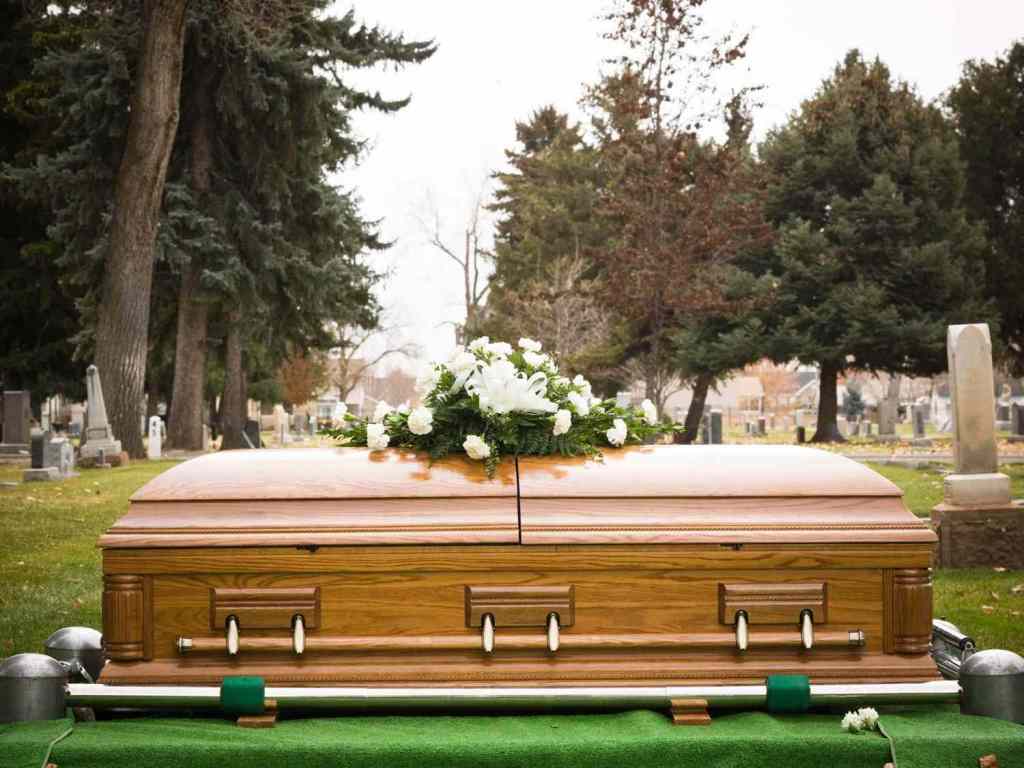
“Dear friends and family, we gather here today in grief and love to remember the life of [whoever is deceased] and to support one another during this difficult time. As we come together, let us take a moment to pray for comfort, healing, and strength.” The loss of a loved one is terrible. You have to face the harsh reality that they are physically no longer here. You cannot call them up or pull up on them. You can no longer share your personal business, confront them about something they did or said, share your memories, or create new ones with them.
And while we all respond to grief in different ways, we never stop to think about the rituals we perform for the dead. We never stop to think about where the “dressing of the body” came from or why we gather to put the body into the ground. Why do we feast on food at the deceased loved ones’ homes? What are the flowers for anyway? Whose idea was it to put the dead in a box? Who decided that putting them in the ground was a good idea in the first place? And where do all these bodies go? I mean, clearly, no new cemeteries are being opened… Right? Have you seen any new ones in your town? And who thought it was a great idea to start a funeral home? This blog won’t answer many of these thoughts, but it gives you something to think about…. Doesn’t it.
The concept of funerals, a ceremony to honor and remember the dead, spans thousands of years, intertwining with the fabric of human history and evolution. This solemn practice reflects the profound impact of death on the living, encapsulating a blend of grief, respect, remembrance, and the deep-seated human need to make sense of life and its inevitable end. Whether they were the best in life or the worst in life, everyone deserves a funeral in the end. Even your family pet, but do not, I mean, do not bury them in a pet cemetery… We know how that turns out…
So let’s wear our Sunday’s best (in black, of course). Ensure you have the flowers, the card, and the dish you made for the repast. Comb your hair, and please brush your teeth (you must speak to folks!), and ensure you have the right directions to be on time. Try not to ugly cry and keep it together until you leave the church! In this blog, we will explore the origins of funerals, the first recorded funeral, the opening of the first cemetery, and the evolution of funeral rituals. We will also delve into the poignant saying, “God Bless the Dead.” But first, let us observe the messy lives of the ones we love, and hopefully, we will meet their “other lovers” at this funeral…. Or not.
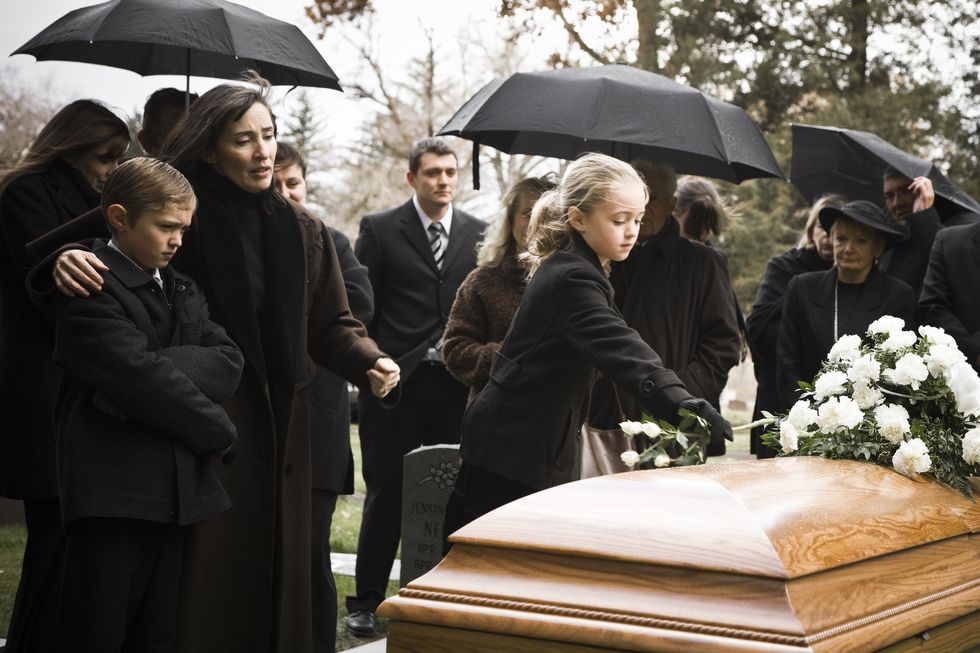
The First Recorded Funeral
The history of funerals is as old as humanity, but the first recorded funeral that offers a clear glimpse into prehistoric burial practices dates back to around 60,000 BC. This event was for the Neanderthals, our ancient cousins, who showed signs of intentionally burying their dead, possibly with flowers and with what can be interpreted as a form of ritual. This evidence, found in the Shanidar Cave in Iraq, indicates a form of respect for the deceased and a belief in an afterlife or spirit world, suggesting that honoring the dead is deeply rooted in our genetic makeup.
The First Cemetary
The concept of a designated place for the dead, or a cemetery, has its earliest known origins in the Middle East. The (modern-day Iraq), one of the great urban centers of the Sumerian civilization around 4000 to 3000 BC, is home to one of the earliest known cemeteries. This ancient site, with its elaborate grave goods, indicates a society with complex social structures and spiritual beliefs about the afterlife. The development of cemeteries was a significant step in human settlements, marking spaces that allowed communities to remember and honor their ancestors.
The Evolution of Funeral Rituals
Over millennia, funeral practices have evolved significantly, influenced by religious beliefs, cultural traditions, and social norms. From the ancient Egyptians’ elaborate mummification processes and journey to the afterlife to the Vikings’ ship burials signifying a voyage to the next world, each culture has developed its unique way of honoring the dead. In more recent history, the Victorian era introduced mourning etiquette and funeral customs that emphasized respectability and remembrance, many of which influenced modern practices.
The 20th century saw the professionalization of funeral services, with the advent of funeral directors and embalming techniques that changed how bodies were preserved and displayed. Today, funerals vary widely around the globe, reflecting a blend of traditional and contemporary practices. A growing trend towards more personal and environmentally friendly funerals, such as green burials, signifies a return to more straightforward nature-focused practices.
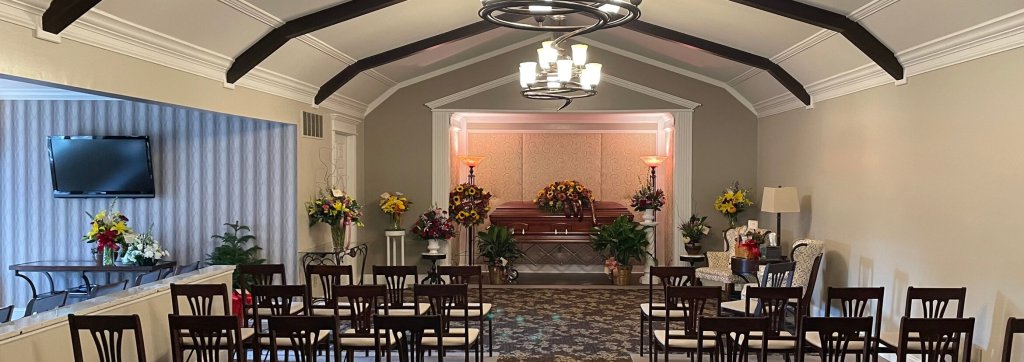
The Creation of the Undertaker and the Rise of the Funeral Home
The creation of the undertaker and the evolution of the funeral home have roots deep in history, intertwining with the development of societal norms surrounding death and the afterlife. In ancient times, funeral rites and body preparations or burial or cremation were typically handled by the deceased’s family; however, as societies grew more complex, the need for specialized services arose. By the 17th century, in Europe and eventually America, individuals emerged as professional undertakers or “morticians,” a term coined from the Latin word for death, “mors.” These early undertakers were often craftsmen, such as cabinet makers or carpenters, who built coffins and provided other funeral goods. Their role gradually expanded to include arranging the funeral process, evolving into what we recognize today as the funeral director.
The first known funeral home in the United States, arguably the world, was established by the Kirk family in Philadelphia, Pennsylvania, in the mid-18th century. Initially, their services were akin to those of the traditional undertaker, but over time, they expanded to offer a full range of funeral services. This evolution marked the transition from simple undertaker services to the more comprehensive funeral home model. The concept of a dedicated facility for conducting funerals—a funeral home—became more prevalent in the 19th century as urbanization and changes in public health laws prompted a shift from home funerals to public or semi-public spaces designed for that purpose. The establishment of these early funeral homes not only professionalized the industry but also reshaped cultural attitudes toward mourning, setting a precedent for the funeral practices we are familiar with today.
Why We Say “God Bless the Dead”
The phrase “God bless the dead” is a reverential expression that underscores the deep human need to wish peace and divine favor upon those who have passed away. Though precisely documented, its origins are deeply rooted in religious traditions and funeral rites that date back centuries. According to various religious beliefs, this expression embodies the collective hope and prayer that the deceased may find peace, mercy, and blessedness in the afterlife; the sentiment behind the phrase aligns with the universal human experience of mourning and the desire to express respect and wishes for eternal rest to the departed. It encapsulates a form of verbal condolence that bridges the gap between the living and the dead, serving as a vocal emblem of respect and remembrance.
Given the wide variation and evolution of funeral customs and languages throughout history, pinpointing the first recorded use of the term or its equivalents is challenging. However, the essence of wishing peace upon the dead is a practice that can be traced back to ancient civilizations, including the Egyptians, Greeks, and Romans, who had elaborate rituals and expressions for honoring their dead. The specific phrase “God bless the dead” in English likely developed in the context of Christian funerary practices, evolving over time as a common expression of condolence and spiritual hope. The creation and use of such a phrase is crucial in the funeral ritual, providing comfort to the bereaved by articulating a common wish for the deceased’s peaceful transition to the afterlife. This tradition of verbally blessing the departed not only aids in the grieving process but also reaffirms the community’s collective beliefs in life beyond death.
Final Thoughts
The history of funerals and the rituals surrounding death offers a fascinating lens through which to view their culture and spirituality. Development from the earliest burials to modern-day ceremonies, these practices reflect our deepest fears, hopes, and beliefs about the mystery of death. As we continue to evolve, so too will our ways of honoring those who have passed, but the essence of the funeral—to remember, to mourn, and to celebrate lives lived—remains unchanged. “God Bless the Dead” is not just a phrase but a timeless expression of our collective hope for peace and transcendence beyond the mortal coil.
Whether you honor them on the anniversary of their passing or you honor them every day, a funeral is not a way to get closure but a way to say goodbye to anyone you have ever loved or known. Although these rituals and practices differ from culture to culture and religion to religion, funerals are a part of everyone’s life. No matter how we say it, we all can say goodbye at the funeral. Be kind to your funeral home and the undertaker. Be grateful and humbled simultaneously; one day, you will go into the ground with the family and loved ones gathered to say farewell. Cherish those memories, for they will fade and be forgotten. All that’s left will be your burial plot, headstone, and stories the family will tell about you. And hopefully, you will rest in peace.
FUN FACTS:
“Saved by the Bell”
The saying “saved by the bell” is often associated with a fascinating and somewhat morbid historical origin. It’s commonly believed to have come from a practice in the 18th and 19th centuries related to the fear of being buried alive. During that time, there was widespread fear of this occurring, partly due to the limitations of medical science, which could make it difficult to determine whether someone was indeed dead.
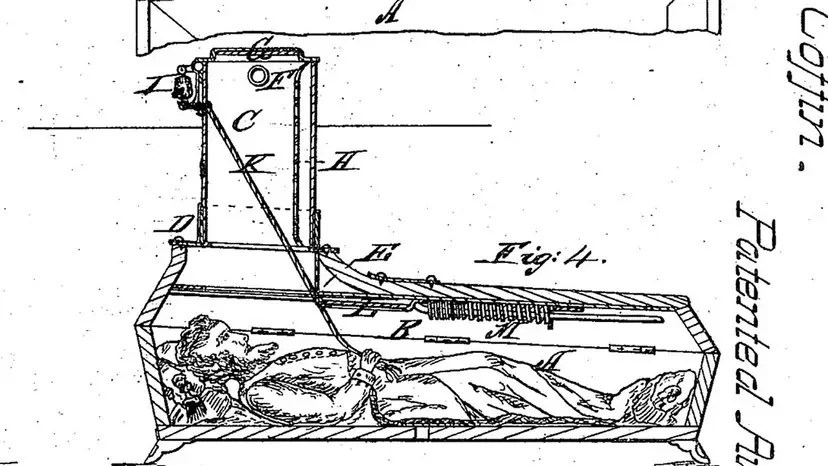
To address this fear, a safety coffin was designed with a mechanism that allowed the “dead” to signal to the living if they were, in fact, still alive. This mechanism typically involved a string attached to the deceased’s hand, which, if moved, would ring a bell on the surface, alerting graveyard watchers to the fact that they had been buried prematurely and thus “saving” them by the bell.
However, it’s worth noting that while this story is widely circulated and contributes to the charm of the phrase, the actual origin of “saved by the bell” is from the world of boxing. The term originated as a boxing term when a fighter who is about to be counted out is saved by the ringing of the bell signaling the end of a round. Over time, it has come to be used more broadly to mean being saved from any problematic situation at the last moment.
 Realizations with Tiffany K. Charles