
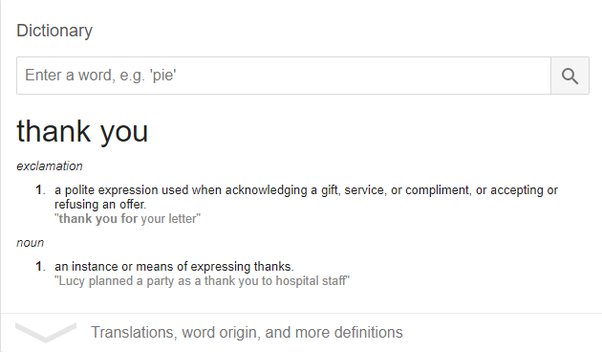
You need help, and it seems you can’t find it anywhere. You think, ” Maybe I should have thought about this before I did it..” And then, boom, you have help out of nowhere. You say, ” Thank you” for the assistance, and then they say, “You’re welcome.” But why are you saying it in the first place? What is the meaning of this phrase? Where did it come from, and why is it etched so profoundly in every culture? Even though there are many different ways to show gratitude for the help, why these words?
No one ever questions why we say certain things or do certain rituals, but why these specific words of ” Thank You”? Indeed, there are many other words we could have chosen to express this enduring need for assistance when needed, but are there no other words that really express gratitude for help better than these? Is “I appreciate it” less gratifying to the helping person? Does ” You’re a Life Saver” poke holes in the act of their kindness? Could Thank you mean “I am thankful for you,” hence the phrase ” Thank You”? Hhhmm……
In a world where digital communication has arguably made us more connected than ever, saying “thank you” retains its profound significance. This timeless phrase is more than a mere formality; it’s a fundamental expression of gratitude, respect, and appreciation. But have you ever paused to ponder why we say “thank you” to acknowledge kindness and assistance and how this phrase came to be? Of course, you haven’t, because why would you? Why question this seemingly simple way of being grateful? After all, it is a part of your home training, isn’t it?
Manners! We were taught bedside ones, home ones, public ones, and relationship ones. There are so many sets of manners we were taught as children. And even though most of them seem stupid, we have incorporated them into our daily lives whether we know it or not. In this blog, while understanding why we say this phrase, we will delve into the origins, the historical journey, and the myriad ways we express gratitude in today’s fast-paced, social media-driven society. We will become more aware of why we say it and, in the process, eventually become better adults for this understanding. So, let’s prepare to display our home training and make our mamas proud as we show appreciation to those who have helped us when we needed it the most.

The Origins of “Thank You”
“Thank you” is deeply rooted in human culture and social interaction. While the exact moment of its inception is elusive, expressions of gratitude have been fundamental to human communication for millennia, and ancient civilizations, such as those of Mesopotamia and Egypt, often expressed gratitude through rituals, offerings, and prayers to deities or higher powers believed to be responsible for blessings and provisions. These acts of acknowledgment were integral to maintaining social harmony and reinforcing communal bonds. As societies evolved, expressions of thanks became more personal and nuanced, reflecting the complexity of human relationships and the importance of reciprocity in social interactions.
First Recorded Usage and Evolution
The first recorded use of “thank you” in its modern form dates back to the 14th century. It was documented in writings from that era as a way to express gratitude. Over the centuries, the phrase evolved and became part of various cultures worldwide, each adding its unique twist to the expression of thanks. The modern form of “thank you” as a verbal expression likely emerged through the evolution of language and cultural exchange. Across different languages and cultures, variations of expressions of gratitude emerged, each carrying its unique nuances and significance.
For instance, “thank you” is derived from the Old English word “thanc,” which means thought or gratitude. Similarly, in other languages, such as French (“merci”), Spanish (“gracias”), or Japanese (“arigatou”), expressions of thanks reflect the cultural values and norms of the respective societies. Despite linguistic diversity, the essence of gratitude remains universal, serving as a fundamental aspect of human interaction and fostering bonds of appreciation and reciprocity across cultures and generations.

Modern Expressions of Gratitude
In today’s digital age, how we express gratitude has transformed, adapting to the platforms and mediums we use. Social media, texts, and emails have given rise to abbreviations and emojis that succinct and innovatively convey thankfulness. Here are some of the contemporary spins on the traditional “thank you”:
- Text Speak & Acronyms: Phrases like “TY” (thank you), “THX” (thanks), and “TYSM” (thank you so much) are commonplace in informal digital communication. They offer a quick and easy way to express gratitude without needing complete sentences.
- Emojis: Emojis, such as the heart ❤️ or the folded hands 🙏 and the⭐, have become a universal language of appreciation. These symbols can convey emotions and sentiments beyond words, making them perfect for quick reactions on social media platforms.
- Creative Expressions: With the rise of social media platforms like Instagram, Twitter, and TikTok, saying “thank you” has taken on creative new forms. Users now express gratitude through heartfelt posts, custom GIFs, and even short video messages, adding a personal touch to the message.
The Significance of “Thank You” in Today’s World
In today’s fast-paced and often impersonal world, saying “thank you” holds profound significance. It is a powerful expression of appreciation and acknowledgment, fostering connections and nurturing relationships. In a society where interactions are increasingly digitized and fleeting, genuine gratitude carries immense weight, conveying sincerity and kindness. Moreover, expressing gratitude uplifts the recipient and cultivates a culture of positivity and mutual respect. In a world often marked by divisiveness and discord, the humility inherent in saying “thank you” serves as a reminder of our shared humanity and the importance of recognizing the contributions and kindnesses of others.
Thus, amidst the complexities of modern life, the timeless value of a heartfelt “thank you” endures as a beacon of warmth and goodwill. Despite the evolution of the phrase “thank you” and the myriad ways we can express it today, its essence remains unchanged. It is a universal acknowledgment of kindness and reflects our shared humanity. In a world where interactions can often become impersonal, expressing gratitude through a simple emoji or a heartfelt message can profoundly impact our relationships and social connections.

Final Thoughts
The act of saying “thank you” reminds us of the importance of kindness, respect, and appreciation in fostering positive interactions and building stronger communities. It transcends cultural and linguistic boundaries, reminding us that, at our core, we all seek acknowledgment and appreciation for our efforts and kindness. As we navigate the complexities of modern communication, let us remember the power of these two simple words. Whether conveyed through a traditional note, a digital message, or a creative expression on social media, “thank you” remains one of the most potent phrases in any language, capable of bridging gaps and deepening connections in an increasingly fast-paced world.
No matter your upbringing or where you go, the universal way to show gratitude for any help is to tell someone thank you for it. Now that you understand the phrase better, will you use it more? Will you be more grateful for those who assist along the way? Will you be more aware of the little helpers you come across, and will you show your appreciation for them just a little bit better by meaning those two wonderful little words? Hopefully, you do, and hopefully, you will hear those words more often and honestly feel gratitude for them when you do. Just reading this blog alone will make you fully understand the real meaning of why we say this… And for that, I thank you. Very much😊

 Realizations with Tiffany K. Charles