

The SAT / ACT is one of many tests that will have your child or children in a chokehold. They will stress over it, dream about it, practice for it, and never forget how the pressure made them cave. Some may have enjoyed cramming in study sessions and work groups. But for many, it was the most challenging time of their lives. It’s the amount of pressure that the exams can place on the shoulders of college hopefuls. If you have ever taken one or both, then you remember how much effort and attention you put just on the focus of studying for them. Just trying to find ways to remember the curriculum to increase your score for those chances of getting into the college of your dreams…
But did all that hard work and late-night studying pay off?? Will you prevail or fail? The night before is the worst anxiety of any young person’s life. Then comes Saturday, and now the cold room is ready for you to take the test. Everything you have studied has gone out of your brain. The panic kicks in, and then you are administered the bubble sheet. You have your pencil, and then the calculators are passed out. You almost passed out. Then, after several weeks, the results are in. Was the score good enough? Will you still get in? The saga continues to this day…
For decades, the SAT and ACT have been the gatekeepers of college admissions, determining students’ eligibility for higher education in the United States. Both tests were created to evaluate students’ reading, writing, and mathematics abilities and provide colleges with a standardized measure of student potential. However, the journey of these two tests to their current form has been long and often controversial. In this blog, we will explore the college admissions test and its history, why it is used for higher education entrance, and the process of how the score is calculated. So, let’s ride on this magic school bus and look in a college course book for this Reading Rainbow special service announcement…

The First Test
The SAT, also known as the Scholastic Aptitude Test, was administered in 1926. It was created by the College Board, a non-profit organization promoting access to higher education. The original SAT consisted of only nine sections and was used primarily to evaluate the aptitude of high school students for college-level work. Over the years, the SAT has undergone several major revisions, with the most recent changes taking place in 2016. The current version of the SAT consists of four sections, including Reading, Writing and Language, Mathematics, and the optional Essay.
The ACT, on the other hand, was created in 1959 as an alternative to the SAT. The ACT was designed to test students’ mastery of high school curricula and evaluate their college readiness. Unlike the SAT, the ACT always includes a science section, which tests students’ understanding of scientific reasoning and analysis. The ACT has remained relatively unchanged over the years, with minor revisions to the format and content of the test.
Recently, the SAT and ACT have been criticized for their role in perpetuating socioeconomic and racial disparities in higher education. In response, both organizations have made significant changes to their tests to make them more accessible and inclusive. The College Board, for example, has introduced a new, optional essay format for the SAT, allowing students to choose from various prompts and write an essay in response. The ACT has also made changes, including the addition of an optional writing section, to better align with high school curricula and reflect the skills and knowledge that students need for success in college and beyond.
Another notable change for both tests is the increasing availability of online and at-home testing options. In response to the COVID-19 pandemic, both organizations have developed online testing platforms to allow students to take the tests from the safety and comfort of their own homes. This has made it easier for students to access the tests, especially those in rural areas or who may have difficulty traveling to test centers.
The SAT (Scholastic Assessment Test) and ACT (American College Testing) are standardized tests commonly used for college admissions in the United States. While they serve a similar purpose, they differ in their formats, content, and scoring systems, which is why colleges rely on them for admissions decisions.

1. Format and Content: The SAT and ACT have distinct formats and question types. The SAT consists of two main sections—Evidence-Based Reading and Writing (which includes Reading, writing, and Language) and Math. It also has an optional Essay section. The ACT comprises four main sections—English, Math, Reading, and Science—and an optional Writing (Essay) section. The ACT’s Science section assesses students’ ability to interpret and analyze data and graphs.
2. Scoring: The scoring systems for the SAT and ACT differ. The SAT has a composite score ranging from 400 to 1600, combining the Math and Evidence-Based Reading and Writing sections, with the optional Essay scored separately. The ACT, on the other hand, provides a composite score ranging from 1 to 36, which is an average of the scores from the four main sections, including the optional Writing section.
3. Score Meaning: Both tests are designed to measure a student’s readiness for college-level work, but they do so in slightly unusual ways. The SAT emphasizes vocabulary and mathematical reasoning skills, while the ACTs a broader range of subjects, including science reasoning. The ACT Science section does not test actual scientific knowledge but assesses a student’s ability to analyze and interpret scientific information.
4. College Admissions: Colleges rely on SAT and ACT scores as part of their admissions process for several reasons:
a. Standardization- SAT and ACT scores provide colleges with a standardized measure of students’ academic abilities. This allows colleges to compare students from different schools and regions on a standard scale.
b. Predictive Value- Research suggests that SAT and ACT scores can predict a student’s potential for success in college to some extent. While they are not the sole predictors, they offer insight into students’ academic preparedness.
c. High School Variation- High schools nationwide have varying curricula and grading scales. SAT and ACT scores provide an additional data point that colleges can use to evaluate applicants.
d. Large Applicant Pools- Selective colleges often receive many applications. Standardized test scores help colleges streamline admissions by quickly assessing students’ academic capabilities.
e. Scholarships and Merit Aid- Many colleges use SAT and ACT scores to award scholarships and merit-based financial aid, making these scores important for students seeking financial assistance.
5. Optional Policies: As of my knowledge, as of September 2021, many colleges have adopted test-optional or test-flexible policies, especially in response to the challenges posed by the COVID-19 pandemic. This means applicants are not required to submit SAT or ACT scores, and colleges evaluate applicants holistically, focusing on other aspects of their applications.
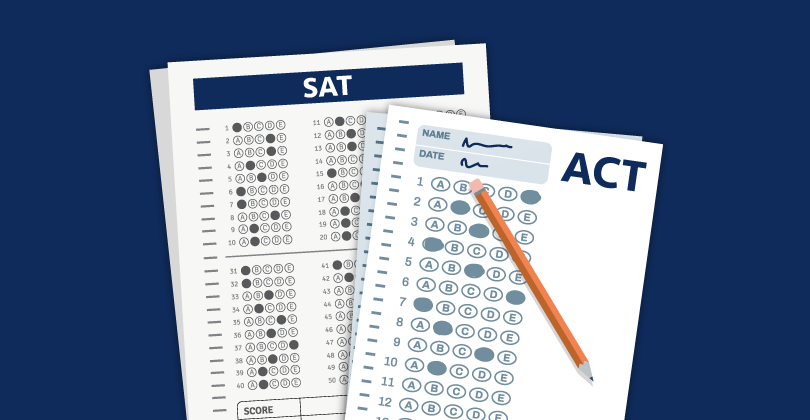
While the SAT and ACT have differences in format, content, and scoring, they both serve as standardized tools to assess a student’s academic readiness for college. Colleges rely on these scores as part of their admissions process to help make informed decisions about applicants within the context of their larger applicant pools. However, the significance of these tests has evolved, with some colleges adopting test-optional policies to emphasize other aspects of an applicant’s profile. Students need to research the policies of the colleges they’re interested in to understand the role of standardized test scores in their admissions process.
Whether to take the SAT or the ACT for college admissions depends on several factors, including the requirements of the colleges you’re applying to, your strengths as a test-taker, and personal preferences. Here are some key points to consider when making your decision:
- College Requirements: Check the admission requirements of the colleges you’re interested in. Some colleges accept both SAT and ACT scores, while others may prefer one. Ensure you know the policies of the specific schools you’re applying to.
- Test Format and Content: The SAT and ACT have different formats. The SAT focuses more on critical reading, writing, and math, while the ACT includes English, math, reading, and science reasoning sections. Your strengths in particular subjects or test-taking skills might influence your decision.
- Scoring Scale: The scoring scales for the SAT and ACT are different. The SAT has a maximum score of 1600 (without the optional Essay), while the ACT has a top composite score of 36. Some students may find one scoring scale more favorable based on their strengths and weaknesses.
- Time Management: The ACT typically has a faster pace, with more questions to answer in less time. If you’re comfortable with quick decision-making and time management, the ACT might be better for you. The SAT allows more time per question.
- Optional Sections: The SAT includes an optional essay section, while the ACT includes an optional science section. Check if the schools you apply to require or recommend these optional sections.
- Preparation Resources: Both tests have prep materials, including practice tests, study guides, and online resources. You should explore these resources for each test and see which aligns better with your learning style.
- Personal Preference: Some students feel more comfortable with one test. Try taking the SAT and ACT practice tests to see which one you perform better or feel more confident about.
- Retesting: Some students perform better on one test after taking it once and then switch to that test for subsequent attempts. Remember that you can take either test more than once to try and achieve your best score.
Final Thoughts
Ultimately, there’s no universally “better” test—it’s about finding the test that matches your strengths and aligns with your college goals. Before deciding, research the colleges you’re interested in and their testing requirements, consider your abilities and preferences, and perhaps even seek advice from school counselors or test prep experts.
The SAT and ACT have played a significant role in determining the futures of millions of students, but their journey has been subject to controversy and criticism. However, with recent changes aimed at making the tests more accessible and inclusive, these gatekeepers of higher education are moving in a more positive direction. The future of the SAT and ACT will continue to evolve, but their goal of providing a fair and accurate measure of student potential remains unchanged.

 Realizations with Tiffany K. Charles