
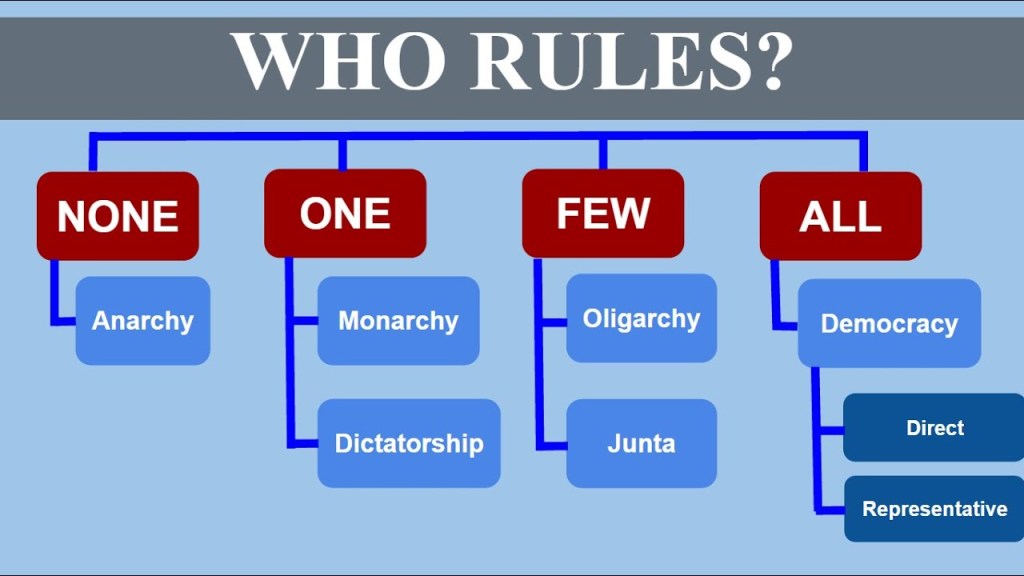
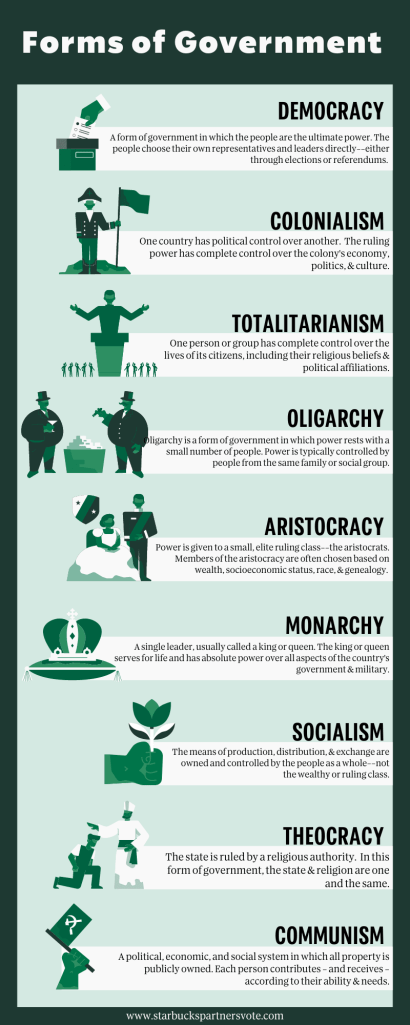
In today’s complex political climate, conversations about democracy often contrast it with a broad and sometimes misunderstood category: non-democratic rule. It’s tempting to group all such systems under one label, but doing so overlooks the nuanced differences that exist between them. Non-democratic governments come in a variety of forms, each with its own structure, objectives, and tools of control.
From strongman rulers to military juntas and royal families, the spectrum of non-democratic regimes is broad. Some concentrate power in the hands of a single individual, while others share control among elites or political parties. Each system functions differently and impacts its citizens in unique ways. Understanding these distinctions is crucial for comprehending global affairs.
In global discussions, it’s also common to hear terms like dictator, communist, or capitalist used interchangeably or out of context. These words describe vastly different political and economic systems, each rooted in distinct ideologies and real-life applications. As we move forward, we’ll clarify what these terms truly mean and how they manifest in modern governance around the world.
In this blog, we will break down key government types, including dictatorships, autocracies, oligarchies, totalitarian regimes, military juntas, absolute monarchies, one-party states, and personalist or populist systems. By examining real-world examples from current events and political contexts, we’ll highlight how these regimes operate and sustain power. You can decide for yourself where you think this country’s government is leading us…

1. Dictatorship: Rule by One, Often by Force
A dictatorship is a government ruled by a single individual with unchecked authority, usually obtained through coercion or non-democratic means. It’s an umbrella term that can encompass several types of rules but is characterized by the absence of institutional checks and balances.
Modern Example:
- North Korea (Kim Jong-un) – A classic dictatorship, where the ruler maintains total authority through fear, propaganda, and repression.
2. Autocracy: Power Concentrated in a Single Authority
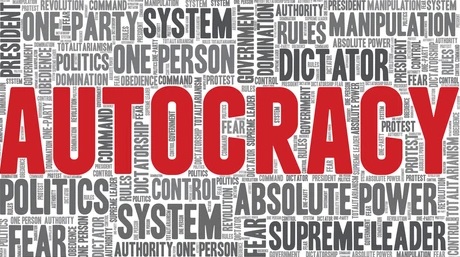
An autocracy is a system of government in which one individual holds supreme power. Unlike a dictatorship, an autocracy may not necessarily be born from violence or illegality—it can be enshrined in law or tradition.
Key Distinction: An autocracy can be more formal or institutionalized than a dictatorship.
Modern Example:
- Russia (Vladimir Putin) – Although elections exist, genuine political competition is largely absent. Power is highly centralized in the executive branch, with limited checks and balances from the other branches.
3. Oligarchy: Rule by the Few
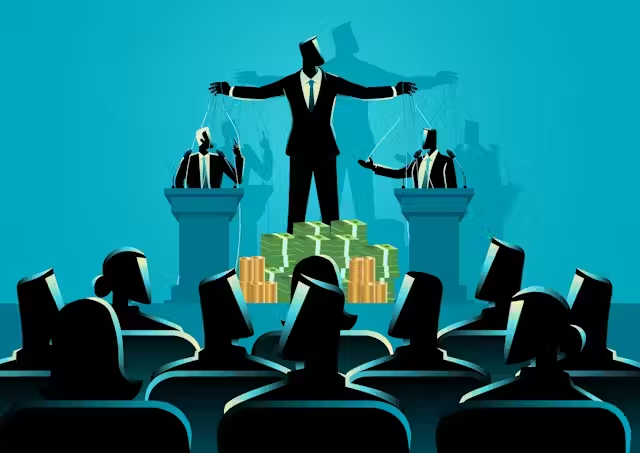
An oligarchy is a system in which a small group of elites, whether economic, military, or political, holds the power and controls decisions. The elite may or may not include a visible leader, and their authority often rests on wealth, family ties, or connections.
Modern Example:
- Saudi Arabia – While the king is officially in charge, the country’s royal family and a close-knit circle of elites control policy and economic resources.
- Iran – Power is concentrated in the hands of clerics and political elites, such as the Supreme Leader and the Guardian Council.

4. Totalitarian Regime: Control Over Every Aspect of Life
A totalitarian regime seeks absolute control over all facets of life—political, social, cultural, and even personal. It’s not just about ruling; it’s about shaping how people think, behave, and live.
Key Features:
- State propaganda
- Constant surveillance
- Ideological indoctrination
- No personal freedoms
Modern Example:
- North Korea again fits this category due to its cult of personality, pervasive surveillance, and extreme restrictions on thought and behavior.

5. Military Junta: Rule by Armed Forces
A military junta came to power through a coup. The junta rules collectively or appoints a leader from among themselves. Civil liberties are typically suspended, and martial law may be enforced.
Modern Examples:
- Myanmar (Burma) – The military seized power in 2021, ousting the elected government and jailing its leaders.
- Thailand has experienced repeated military coups; the military still plays a significant role in politics, despite the country holding regular elections.
6. Absolute Monarchy: Hereditary Rule Without Limits
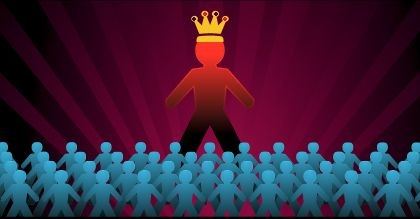
An absolute monarchy is a form of rule where the king or queen holds complete political power, unchecked by constitutions, parliaments, or laws. Leadership is inherited and often justified through religion or tradition.
Modern Examples:
- Saudi Arabia – The king holds legislative, executive, and judicial authority. There is no elected parliament.
- Brunei – Sultan Hassanal Bolkiah holds full executive powers and rules under a declared state of emergency that has been in effect for decades.

7. One-Party State: Legal Monopoly on Power
In a one-party state, only one political party is legally allowed to exist or hold power. Other parties are banned, marginalized, or tightly controlled. The party becomes synonymous with the government, and political opposition is nonexistent.
Modern Examples:
- China (Communist Party of China) – There are no competitive elections for national leadership, and the Communist Party controls all aspects of governance.
- Vietnam & Laos are both one-party communist states, where the ruling party monopolizes power.
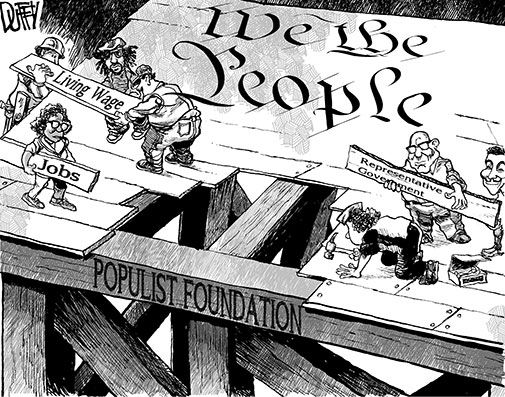
8. Personalist/Populist Regime: Personality Over Institutions
Key Traits:
- Cult of personality
- Direct appeals to the people over institutions
- Attacks on the media, judiciary, and opposition
Modern Examples:
- Turkey (Recep Tayyip Erdoğan) – Has gradually consolidated power, sidelining parliament and transforming the political system into a personalized presidency.
- Nicaragua (Daniel Ortega) – Once a revolutionary leader, now rules with his wife as vice president and has jailed political opponents and suppressed dissent.
Types of Authoritarian Rule
Government Type Who Holds Power Power Source Modern Examples
Dictatorship: One ruler, often through coercion, North Korea, Syria
Autocracy: One person, Legal/institutional power, Russia, Belarus
Oligarchy: a Small elite group. Wealth, family, religion, Saudi Arabia, Iran
Totalitarian Regime, State apparatus, Ideological and total control, North Korea
Military Junta, Military officers, Coup, force, Myanmar, Sudan
Absolute Monarchy, Hereditary monarch, Tradition, religion, Saudi Arabia, Brunei
One-Party State, one legal political party, law banning other parties, China, Vietnam, Laos
Personalist/Populist Charismatic leader Public support, propaganda Turkey, Nicaragua, Venezuela (arguably)
Final Thoughts
Authoritarianism is not one-size-fits-all. While many of these systems overlap—for example, a dictatorship can also be totalitarian or personalist—each has unique mechanisms of control. Understanding the distinctions between them isn’t just an academic exercise; it’s essential for analyzing world events, assessing threats to democracy, and promoting human rights. When we use these terms, we need to be precise. A dictator isn’t necessarily a fascist. An autocracy isn’t always a communist state. And capitalism doesn’t guarantee democracy — it simply defines who controls the money, not necessarily who holds the power.
Understanding the differences between these systems helps us make sense of global events, international relations, and even domestic policy debates. While no system is without flaws, it’s important to distinguish between how leaders govern and how economies are structured. Some governments blend elements of different systems — for instance, China combines communist political control with capitalist economic practices. Likewise, some democracies adopt socialist programs within capitalist economies.
 Realizations with Tiffany K. Charles